1. Introduction
Tobacco consumption remains a major public health concern in Indonesia, where high smoking prevalence and the toxicity of cigarette compounds indirectly impose significant burdens on low-income households (Marieta & Lestari, 2022; Swarnata et al., 2024). Nevertheless, this industry sector retains considerable economic weight, generating value from local tobacco and cloves and employing about 5.98 million workers across manufacturing, distribution and plantations (Kementerian Perindustrian, 2019). It also plays a central fiscal role, with customs and excise revenues reaching IDR300.1 trillion in 2023 and IDR321 trillion in 2024, of which tobacco excise contributes more than 70 per cent (Kementerian Keuangan, 2024a). However, strong demand driven by addiction, combined with rising excise rates, has intensified the shift towards illicit products, as reflected in the increase in illegal cigarette incidence from 4.9 per cent in 2020 to 6.9 per cent in 2023 (Kementerian Keuangan, 2024b). These dynamics underscore the need for an excise policy capable of simultaneously protecting public health, supporting industry and labour, and securing revenue, as well as curbing illicit trade. These four objectives subsequently evolved into the core pillars of Indonesia’s excise policy (Direktorat Jenderal Bea dan Cukai (DJBC), 2022).
Therefore, the imperative to balance the four foundational pillars of Indonesia’s excise policy necessitated the adoption of a multi-tiered excise structure. This framework accommodates product heterogeneity and variation in producer capacity by classifying tiers according to product type, minimum retail selling price and manufacturing scale. Consequently, while the system generates differentiated tax burdens across market segments, it also produces price disparities that shape consumer substitution behaviour (Agarwal et al., 2025; Dauchy & Adrison, 2023)
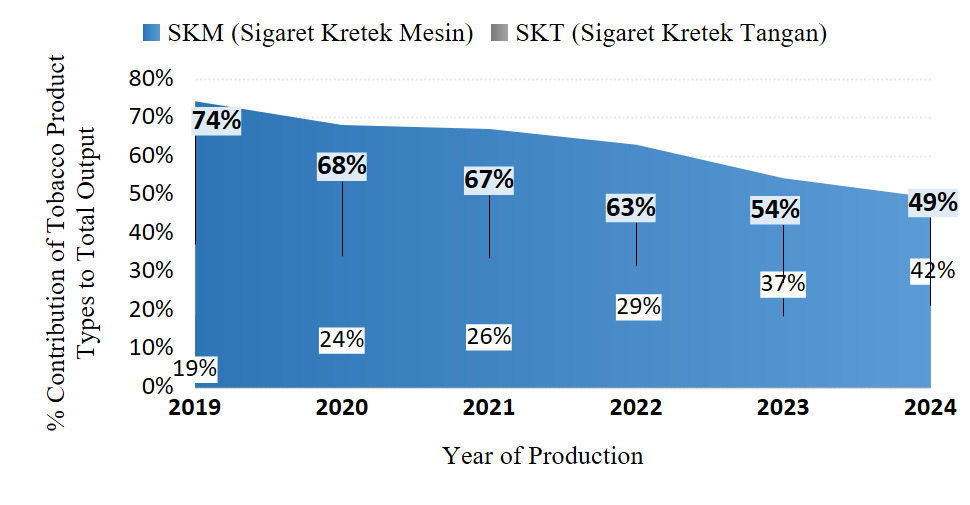
Empirical studies suggest that higher excise rates reduce cigarette consumption, for instance, a 1 per cent rise in excise is associated with an approximate 1.056 per cent reduction in use (Kusuma Wardani & Khoirunurrofik, 2022). Even then, demand for cigarettes in Indonesia remains relatively inelastic (Afin et al., 2021; Rasyid, 2019). Consequently, with the Indonesian government’s policy of consistently increasing tobacco excise taxes each year, many low-income smokers react to price increases by switching to cheaper brands rather than quitting. This behaviour, commonly termed downtrading (Tempo, 2023), poses a major obstacle to the effectiveness of excise taxation as a tobacco control strategy (Huque et al., 2024). However, based on recent excise tax stamp orders (CK-1)[1] from the Directorate General of Customs and Excise (DGCE)[2], between 2019 and 2024, the contribution of machine-made Kretek cigarettes (Sigaret Kretek Mesin, SKM)[3] to total excise revenue fell from 74 per cent to 49 per cent, while hand-rolled Kretek cigarettes (Sigaret Kretek Tangan, SKT)[4] increased from 19 per cent to 42 per cent (Figure 1). This indicates that smokers shift from higher-priced cigarette categories, such as SKM, to lower-priced alternatives, such as SKT. Taken together, these shifts underscore that annual tariff increases alone are insufficient; without structural simplification to narrow price gaps, excise policy will continue to incentivise substitution rather than cessation.
.png)
Existing research on Indonesia’s tobacco excise policy shows that tax simplification tends to be more effective in reducing cigarette consumption compared to ordinary tariff increases (Lestari, 2018; Makarim & Purwana, 2022), with further evidence showing its contribution to lowering youth smoking prevalence (Irawan, 2024). Nevertheless, the growing phenomenon of downtrading, where consumers shift to cheaper tobacco products instead of quitting, poses a significant challenge to the effectiveness of such policies. Similar substitution behaviours have also been documented internationally, such as in Italy, where smokers often switch to lower-priced brands when price disparities persist across products (Crespi et al., 2021), a trend further reinforced by industry pricing strategies (Sheikh et al., 2023). In response, the World Health Organization (WHO) has recommended the adoption of a simplified excise system to minimise opportunities for downtrading (WHO, 2021). Despite these findings, the specific link between excise policy design and downtrading in Indonesia has not been systematically examined, leaving an important gap in the policy literature.
To address this gap, this study aims to examine how tobacco excise policy interacts with consumer behaviour, particularly the phenomenon of downtrading, to identify the factors that undermine its effectiveness. By analysing these dynamics, the research seeks to provide evidence for designing more adaptive excise strategies that can achieve excise objectives.
2. Literature Review
2.1. Theoretical foundations
Excise simplification can be understood through public policy theory as a government effort to improve the coherence and performance of fiscal instruments. As part of fiscal policy, excise carries both revenue and regulatory objectives, and its design is shaped by policy actors, target groups and institutional contexts (Djirimu, 2019; Dunn, 2003). When multi-tier structures become overly fragmented, they create administrative burdens and opportunities for regulatory arbitrage, signalling a misalignment between policy goals and policy instruments. Simplification therefore emerges as a corrective response to structural inefficiencies that weaken both fiscal stability and public health (Barber & Ahsan, 2009; Sarjana & Adrison, 2024).
Although excise systems may adopt specific, ad valorem or mixed tax structures, each system affects price dispersion, consumer substitution patterns and the distribution of tax incidence in distinct ways. In Indonesia, the tobacco market operates under a multi-tiered specific excise that unintentionally widens price gaps across product categories (Dauchy & Adrison, 2023; Filby, 2025). In principle, a specific excise is designed to raise prices uniformly and limit strategic pricing (Hidayat & Surjono, 2016). However, its effectiveness is determined by demand elasticity and the economic incidence of taxation. Because cigarette demand is relatively inelastic (Afin et al., 2021; Rasyid, 2019), producers can shift most of the tax burden forward to consumers with minimal reductions in total consumption, meaning that higher prices often trigger substitution rather than cessation (Hidayat, 2013). Within a multi-tier system, when producers pass the tax burden on to consumers, the wide price gaps between tiers make it easy for smokers, especially those who are price-sensitive, to switch to cheaper, lower-taxed products instead of quitting (Blecher & Van Walbeek, 2004; Firmansyah, 2018). In addition, the same structural fragmentation also weakens compliance and expands opportunities for illicit cigarettes, as complex classifications and the presence of very low-priced legal products facilitate misclassification, tax evasion and illegal market entry, ultimately undermining public health goals, weakening national security safeguards and reducing government revenue (Ardana et al., 2025)
Furthermore, the Multiple Streams Framework (MSF)[5] adds explanatory value by clarifying why simplification advances only when certain conditions align. Policy change requires the convergence of problem recognition, such as concerns about downtrading, illicit trade and revenue risks, feasible policy alternatives, and favourable political dynamics (Béland & Howlett, 2016; Herweg et al., 2023). A qualitative MSF lens therefore highlights that excise reform is not driven by technical evidence alone but by how policymakers interpret problems, weigh alternatives and navigate political constraints, complementing economic and behavioural analyses of excise design.
In addition to comparable studies (Table 1), other studies provide key insights into tobacco excise policy. A few studies show that excise simplification can reduce consumption, though its effectiveness differs across smoker groups and must be balanced with revenue goals (Lestari, 2018). International evidence and WHO guidance emphasise that simple, coherent tax structures are crucial to limiting downtrading (Geboers et al., 2023; Mores et al., 2024; Sheikh et al., 2023). These findings highlight the need for an approach that integrates policy design with political dynamics to guide effective excise simplification in Indonesia (Hamidi & Mayasari, 2023; Iswahyudi, 2020; Swarga et al., 2025). Building upon these findings, this study develops an integrated framework that links the problem, policy options and political context to generate practical recommendations for improving tobacco excise policy in Indonesia.
3. Methods
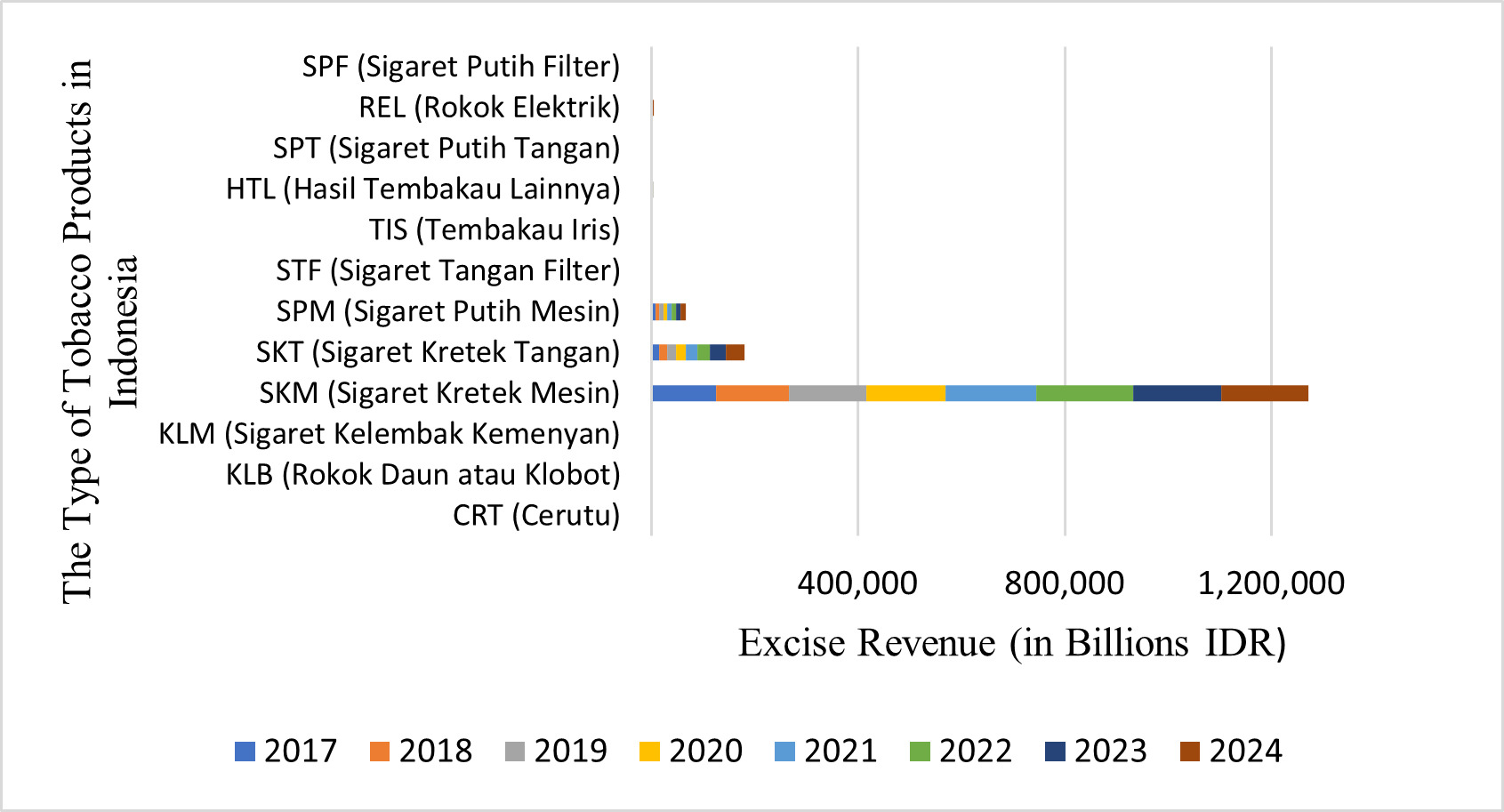
This study employs a qualitative case study design to analyse how Indonesia’s tobacco excise tariff policy has responded to the rise of downtrading. Despite the availability of extensive quantitative data, a qualitative approach is required to capture behavioural dynamics, institutional considerations and policy processes that numerical indicators alone cannot reveal (Sekaran & Bougie, 2016; Yusuf, 2014). The analysis centres on the three principal excisable cigarette categories, specifically SKM, SKT and machine-made white cigarettes (Sigaret Putih Mesin, SPM)[6], selected due to their dominant contribution to national excise revenue, as illustrated in Figure 2. The 2017–2025 period was purposefully chosen to cover the onset of downtrading and successive policy adjustments, including multi-year revisions, annual tariff changes and tier simplification, enabling a comprehensive assessment of how these fiscal measures influence consumption patterns and revenue outcomes.
.png)
Primary data were collected through semi-structured interviews with 13 key informants purposively selected for their institutional roles, expertise and direct involvement in the tobacco excise policy cycle. Interview protocols were tailored to each informant’s expertise to ensure analytical depth (Yusuf, 2014). The informants comprised:
-
government officials from the Directorate General of Economic and Fiscal Policy (DGEFS)[7] and the DGCE, selected for their roles in formulating and implementing tobacco excise tariffs
-
academic analysts from Universitas Indonesia (UI) and the Center for Human and Economic Development (CHED) ITB Ahmad Dahlan, providing independent policy and socioeconomic analysis of tobacco excise
-
industry representatives from the Association of Indonesian White Cigarette Producers (GAPRINDO), included to capture producer responses to excise policies
-
tobacco control advocates from the National Commission for Tobacco Control (Komnas PT), representing public health and regulatory perspectives
-
fiscal policy experts from the Danny Darussalam Tax Center (DDTC), contributing technical analysis of excise design and revenue implications
-
consumer perspectives from the Indonesian Consumers Foundation (YLKI) and nine purposively selected active smokers, reflecting diverse socioeconomic backgrounds and smoking preferences to examine heterogeneous downtrading responses.
The observations were conducted both directly, during interviews with selected consumers, and indirectly through verification of previously consumed cigarette brands online. All interviews were recorded with consent and transcribed verbatim. The transcripts were analysed using NVivo-supported thematic-content analysis, which facilitated systematic coding, hierarchical organisation of categories and visual mapping of conceptual linkages. The analytic process comprised:
-
first-cycle coding, descriptive, in vivo and process coding, to generate initial labels
-
second-cycle coding, the clustering of codes into broader themes based on conceptual relationships emerging from the data.
The approach integrates elements of thematic analysis for identifying interpretive patterns and content analysis for examining the prominence and distribution of themes. In addition, data triangulation was carried out by cross-verifying information across multiple sources, methods and relevant literature to enhance the credibility, dependability, transferability and confirmability of the findings (Miles et al., 2014; Yusuf, 2014). Findings were interpreted iteratively and contextualised within the MSF to examine policy responses to downtrading, identify implementation challenges and provide empirically grounded policy recommendations.
4. Results
4.1. Complexity of Indonesia’s tobacco excise policy
Indonesia’s tobacco excise policy has evolved through multiple structural shifts. Initially, the system relied on a multi-tier ad valorem scheme in the early 2000s, which later transitioned to a hybrid structure in 2007–2008 and subsequently to a multi-tier specific excise from 2009 onward. A major reform window opened in 2012, when annual tariff adjustments were accompanied by structural simplification, reducing the number of tiers from 19 to 12 by 2015. Moreover, further simplification was envisioned under PMK No. 146/PMK.010/2017[8], which targeted a five-tier structure by 2021; however, this plan stalled following the regulation’s revocation in 2018 amid strong industry resistance. Reform momentum later resurfaced under the RPJMN 2020–2024 and Presidential Regulation No. 18/2022, signalling renewed efforts to reconcile fiscal and health objectives (Widoyoko et al., 2022).
In addition, two regulatory mechanisms contributed to growing system complexity. First, repeated revisions of production-based manufacturer classifications allowed certain larger firms, particularly in the SKT segment, formerly divided into sub-tiers such as I, II, IIIA and IIIB, to qualify for lower tax groups. Second, the Minimum Retail Selling Price (Harga Jual Eceran, HJE)[9], originally a technical safeguard, gradually became a central policy instrument; because excise is capped at 57 per cent of HJE under Law No. 39/2007, it enabled the government to increase the effective tax burden while limiting underpricing practices. Taken together, the interplay between tier proliferation, shifting production thresholds and strategic deployment of HJE highlights how Indonesia’s excise system has become not only administratively demanding but also politically contested (Ahsan et al., 2021). Consequently, the persistent challenge remains how to balance revenue generation, industry interests and tobacco control within a single policy framework.
4.2. Downtrading patterns in Indonesia’s tobacco consumption
Within the MSF, downtrading can be situated in the problem stream, as it reflects a policy issue that has entered the agenda of regulators. Recognising downtrading as a policy problem represents a crucial step in opening a policy window for excise reform. In Indonesia, this phenomenon has gained importance particularly after 2021, when successive fiscal policies in tobacco excise began to reveal shifts in consumption patterns. Regulatory observations, supported by production data from the Ministry of Finance and DGCE, indicate a decline in output from Tier I products between 2018–2024, with an average contraction of 7.5 per cent. In contrast, production grew by 9 per cent in Tier II and 25.9 per cent in Tier III. This divergence suggests a gradual substitution from higher- to lower-tier cigarettes, which policymakers increasingly recognise as an indicator of downtrading in Indonesia’s tobacco market.
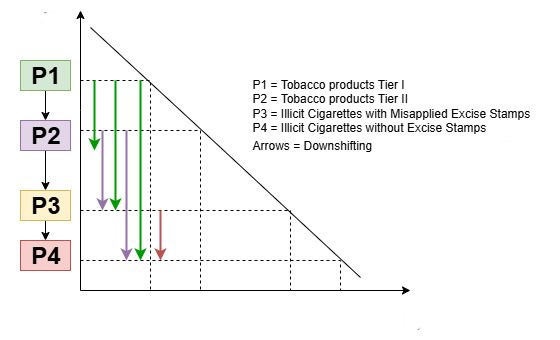
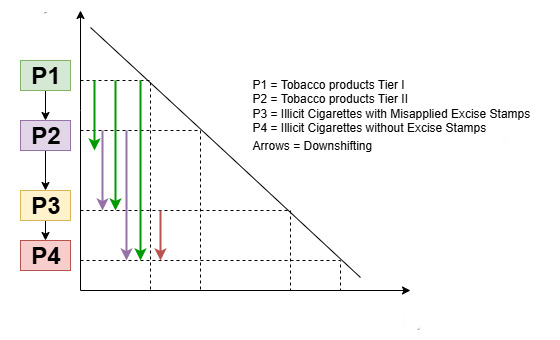
As shown in Figure 3, DGCE observes that problems arise when excise tariffs and the Minimum Retail Selling Price for Tier I products (P1) no longer match the purchasing power of many consumers. Smokers initially move to cheaper, lower-taxed brands (P2, Tier II), but this shift often extends further. DGCE identifies transitions towards products with misapplied tax stamps (P3) and, in more severe cases, towards entirely untaxed cigarettes (P4 or rokok polos). The 2023 UGM Illegal Cigarette Survey confirms this trend, reporting a rise in untaxed cigarettes to 1.9 per cent (Kementerian Keuangan, 2024b). This progression, from P1 to P4, illustrates how fragmented excise tiers and affordability gaps can unintentionally channel consumers from legal to illicit products, posing fiscal, regulatory and public health risks.
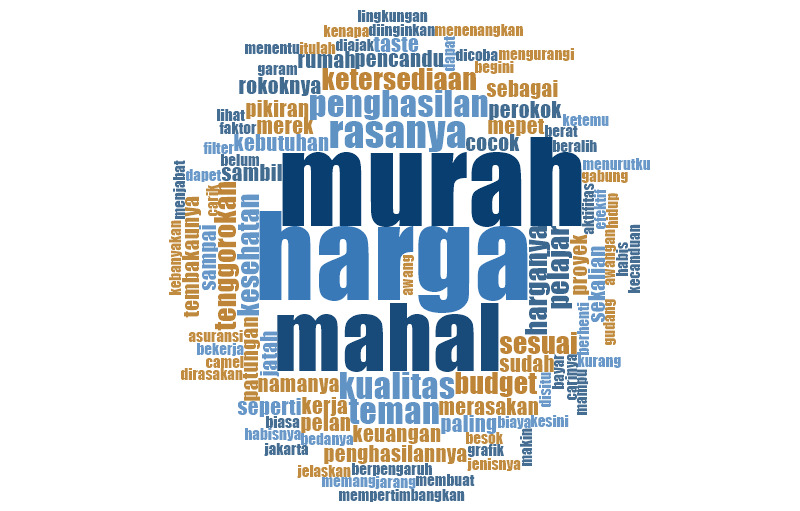
Furthermore, from the consumer side, downtrading represents an adaptive response to rising cigarette prices driven by excise adjustments. Low-income groups, informal workers, students and even civil servants are especially prone to prioritising affordability when purchasing tobacco products. As shown in Figure 4, interviews indicated that most respondents shifted to cheaper brands following tariff increases, while a smaller portion maintained brand loyalty but reduced consumption. This pattern reflects a clear substitution effect, whereby smokers replace premium products with lower-priced alternatives, as explained by one of the interviewees, ‘The first choice is the cheap one, because I simply cannot afford the expensive ones’ (Informant K, agricultural labourer, irregular income).
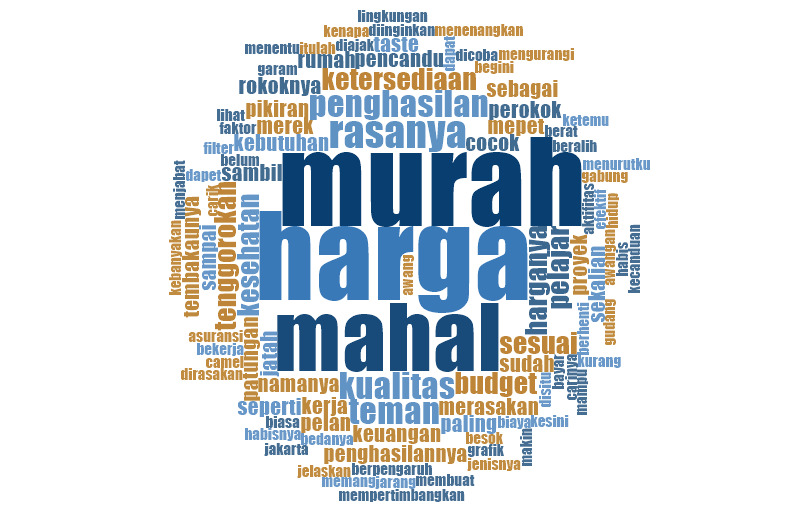
The interviews and the observations of nine active smokers indicate that consumer downtrading in Indonesia follows three main patterns: class shift, type shift and product shift. Class shift refers to movement from higher-taxed tier I cigarettes to cheaper Tier II or III products (seven of nine smokers). Type shift occurs when smokers move from SKM or SPM to lower-priced SKT, particularly prevalent in rural markets (two of nine smokers). Product shift involves substituting conventional cigarettes with alternative nicotine products, such as e-cigarettes, smokeless tobacco or hand-rolled cigarettes, which are often cheaper or only partially taxed (five of nine smokers). Some price-conscious consumers also acknowledge having tried illicit cigarettes as a substitute (four of nine smokers). However, based on the interviews, most consumers engaged in class shifting to preserve the familiar taste of their preferred cigarette brand while obtaining it at a lower price. Together, these patterns demonstrate how excise-driven price differentials shape substitution behaviour, especially among low-income smokers, as explained by one interviewee:
For example, the Dunhill cigarette I once tried is produced by a tier-2 manufacturer. But since it’s made by Bentoel – which has been in the cigarette industry for a long time – the taste is quite good. It’s almost comparable to Sampoerna, though just slightly. (Informant IS, 7-year active smoker, consuming both SKM and VAPE)
4.3. Impacts of tobacco downtrading in Indonesia
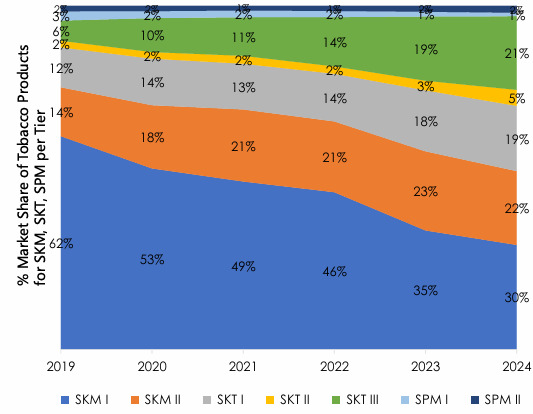
Tobacco downtrading in Indonesia, defined as the shift from higher-priced to lower-priced cigarette products, has significant fiscal, health and industrial implications. From a fiscal perspective, about 62 per cent of key informants (8 of 13) noted that downtrading primarily reduces excise revenue. This is a view consistent with DGCE data showing that the decline is largely driven by a falling SKM Tier I that historically was the largest contributor due to high specific tariffs and large production volumes each year. As in Figure 5, based on market share up to 2024, SKT continued to experience positive growth, in contrast to SKM, whose growth has consistently declined, leaving only 30 per cent for SKM I in 2024. The decline in SKM I consumption led to the non-achievement of excise revenue targets in 2023, despite tobacco excise remaining the largest contributor to total excise revenue, constituting 70 per cent of the government’s revenue from the customs and excise sector (Kementerian Keuangan, 2024a).
.png)
Moreover, health impacts are substantial, as cheaper cigarettes maintain smoking habits among existing smokers and increase accessibility for vulnerable groups, including adolescents and low-income populations. Consumption strategies, such as buying cigarettes in single sticks or pooling purchases, demonstrate that price adjustments alone are insufficient to curb smoking prevalence. Consequently, adult smoking rates remain stagnant (Badan Pusat Statistik (BPS), 2025) and tobacco-related illnesses continue to impose a heavy financial burden on national health insurance, with estimated costs between IDR17.9–27.7 trillion per year (Meilissa et al., 2021).
In addition, downtrading facilitates the growth of the illegal cigarette market, as non-taxed products offer substantially lower prices and higher profit margins, undermining regulation and potential state revenue. As the informant from Directorate of Enforcement and Investigation, DGCE, states, ‘…In this case, there may indeed be a business opportunity specifically for illegal cigarette operators…’
Downtrading, however, has increased demand for SKT, a labour-intensive sector, generating employment opportunities, enhancing household incomes and producing multiplier effects for local economies. As the informant from Malang Customs and Excise Service and Supervision Office of DGCE states:
…If we look at our revenue, which is IDR230 trillion in 2025, almost IDR140 trillion – or about 60–70 per cent – comes from East Java, specifically East Java I and East Java II. This includes revenue contributions, and if we consider the multiplier effect, it is also significant….
4.4. Policy processes and political dynamics in Indonesia’s tobacco excise tariff formulation
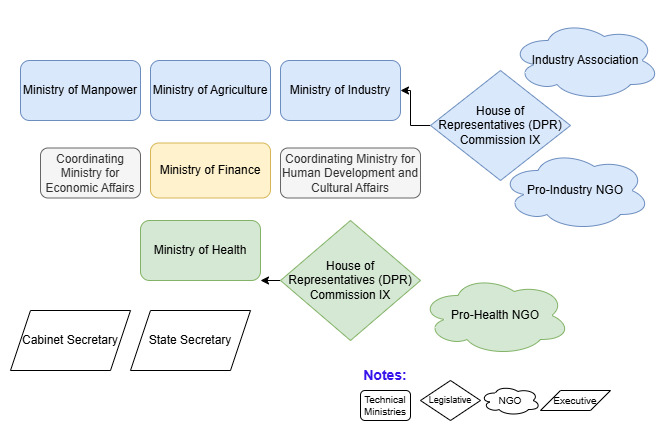
The formulation of tobacco excise policy in Indonesia involves multiple stakeholders whose interests shape the final policy outcomes. Key actors include the government, Parliament (House of Representatives of the Republic of Indonesia), the tobacco industry and civil society groups advocating for public health. Conflicting interests are evident, with the government often aligning with civil society to enhance the technocratic legitimacy of excise policies, while Parliament tends to maintain closer ties with the tobacco industry due to political and economic considerations (Ahsan et al., 2021). This interaction generates discontinuity between executive agendas and legislative decisions, as exemplified by coalition parties rejecting proposed maximum excise rate increases. The dynamics among actors involved in tobacco excise policymaking in Indonesia are illustrated in Figure 6.
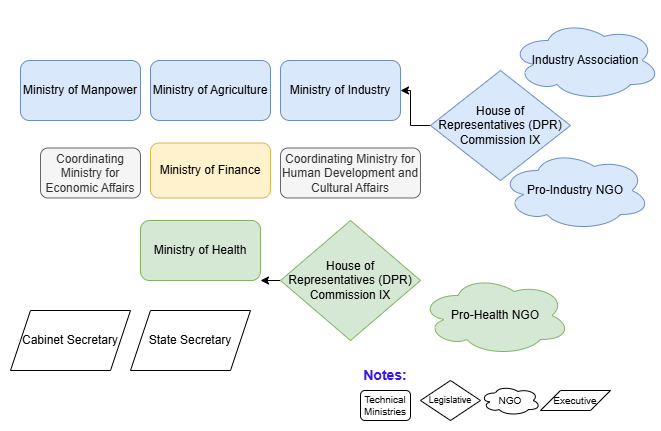
Civil society influence remains limited, allowing business interests to dominate the legislative process. Informants from regulatory and research institutions highlighted that the tobacco industry’s economic resources and lobbying power, reinforced by legal mandates such as Article 5(4) of the Excise Law No. 39 of 2007, further complicate policy formulation:
The determination of the state revenue target from excise in the Draft State Budget or Rencana Anggaran Pendapatan dan Belanja Negara (RAPBN)[10] and the Minister’s alternative policies to optimize efforts to achieve the revenue target, taking into account industry conditions and the aspirations of industry stakeholders, is submitted to the House of Representatives of the Republic of Indonesia (DPR RI) for approval. (Article 5(4) of the Excise Law No. 30 of 2007)
Technical ministries also exhibit partiality according to institutional priorities, emphasising the need for neutral coordination to align internal government consensus with broader national development goals. Political economic factors, particularly the political budget cycle, influence the timing of excise adjustments. In election years, excise increases are often avoided to maintain public support, as observed in 2014 and 2019. Despite short-term populist pressures, long-term government objectives remain aligned with national development and global agendas, including Indonesia’s Vision 2045 (Golden Indonesia 2045) and the United Nations’ Sustainable Development Goals (SDGs). Key indicators of concern are reductions in smoking prevalence among youth, reflecting commitments to public health and human capital development.
Current policy directions focus on strengthening tobacco excise instruments through gradual rate simplification and improved governance to balance public health goals with revenue and industrial sustainability under the RPJMN 2025–2029. Informants emphasised that higher excise rates serve both to curb consumption and address downtrading, consistent with the intended function of excise as a health-oriented fiscal instrument. Therefore, considering the numerous interests involved in formulating excise rate policies addressing downtrading with a focus on tobacco control, the commitment of the President as the highest authority and the overall focus of the Indonesian government are required.
4.5. Evaluation of Indonesia’s tobacco excise rate policy
Indonesia’s excise law (Law No. 39 of 2007) imposes a maximum excise rate of 57 per cent of the retail selling price for both domestically produced and imported tobacco products. Between 2017 and 2025, excise rates for SKM and SPM Tier I (also II) consistently approached this maximum, whereas SKT remained well below it. This uneven rate adjustment has contributed to the phenomenon of downtrading, as consumers shift from higher-taxed SKM and SPM to lower-taxed SKT, increasing the market share of SKT. Simulation analyses (Table 2) show that, despite rising SKT production, revenue gains from SKT excise increases were insufficient to offset losses from declining SKM and SPM production, negatively impacting total state revenue in 2023. Moreover, this disparity has reinforced SKT as a preferred product both for consumers and producers, further driving downtrading.
In addition, 38 per cent of key informants (five of 13) noted that Indonesia’s multi-layered excise structure was originally designed to protect small-scale producers; the system has become increasingly outdated. Academic analysts from UI argue that the proliferation of low-priced new brands demonstrates how many lower-tier SKM and SKT firms are now dominated by multinational companies capable of exploiting tier differentials to maintain products in the lowest tax categories:
Such tiering is no longer relevant, as all cigarettes are harmful to health. Even Kretek cigarettes are now owned by multinational companies, by foreign firms. Meanwhile, cigarette manufacturers benefiting from lower excise rates – particularly SKT producers in tiers II and III – actually have annual turnovers that exceed those of typical small and medium enterprises. (Informant AA-UI, academic analyst from UI).
In contrast, as noted by DGEFS, Indonesia’s continued reliance on a complex tiered structure, rooted in the historical and cultural significance of Kretek, has widened price gaps across product categories, encouraged downtrading and ultimately weakened both public health outcomes and revenue performance.
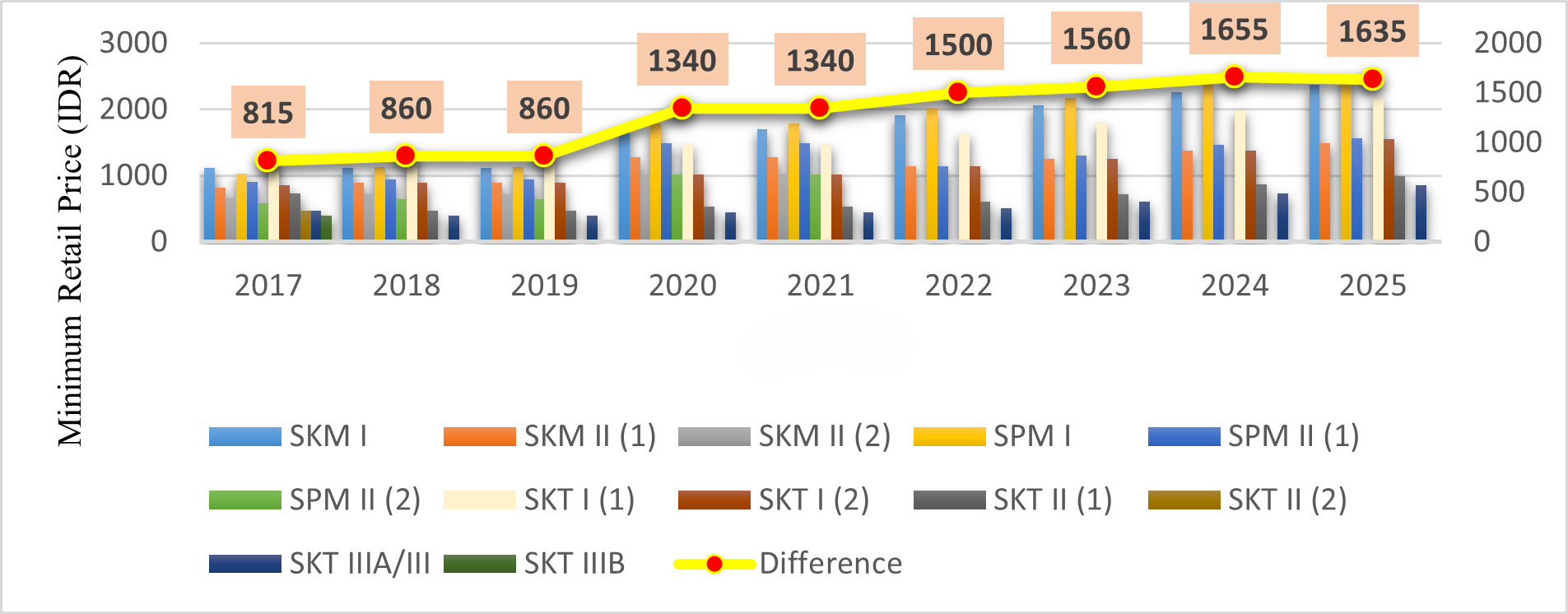
Data from 2017–2025 (Figure 7) indicate that the HJE gap between premium and low-end products has generally widened, although recent trends suggest efforts to narrow this disparity. Non-compliance with minimum HJE regulations and promotional practices by the industry also undermine excise effectiveness as a public health measure (Yayasan Anak Lentera, 2018).
__2017--2025.png)
In conclusion, Indonesia’s current excise structure, with its uneven rates, multi-layered system and price gaps, partly explains both revenue challenges and persistent downtrading, highlighting the need for policy reforms aimed at excise simplification, equitable tax application and stronger health-oriented regulation.
5. Discussion
5.1. Problem stream: why simplification is needed
From the perspective of the MSF, the empirical findings substantiate the existence of a mature problem stream in Indonesia’s tobacco excise policy. Quantitative indicators and qualitative evidence jointly demonstrate that the current multi-tier specific excise system fails to achieve its core objectives. Despite sustained annual excise increases, overall cigarette consumption has not declined proportionally. Statistics Indonesia data show a 0.4 per cent year-on-year increase in Kretek consumption in 2023 (BPS, 2023), while DGCE production and market-share data indicate a pronounced shift from higher-taxed SKM I towards lower-taxed SKM II–III and SKT. This pattern reflects structurally induced downtrading rather than isolated behavioural choice.
Downtrading produces asymmetric economic effects across firm size, disproportionately disadvantaging small and medium tobacco producers while strengthening large manufacturers. Large firms benefit from economies of scale and product diversification that allow them to absorb excise increases and offer lower-priced variants, thereby retaining consumers who downtrade (Arifin, 2021; Astuti et al., 2023). Conversely, smaller producers face higher unit costs and limited pricing flexibility, increasing exit risk and market concentration. Excise simplification can reduce price segmentation and tax arbitrage, but without safeguards, it may also accelerate industry consolidation that proves fatal to the survival of small-scale producers.
Moreover, DGCE’s monitoring (Figure 3) illustrates how affordability gaps and tier fragmentation enable a gradual progression from legal premium products towards misclassified and untaxed cigarettes, a pattern reinforced by Firdaus and colleagues (2025). They document illicit cigarette prevalence of 10.77 per cent across six cities, exceeding 20 per cent in Surabaya and Makassar, where most illegal products closely resemble legal cigarettes through branding and pictorial health warnings but lack excise stamps. This indicates that illicit trade is driven less by excise increases alone than by enforcement gaps, weak control over rolling machines, and producers’ capacity to mimic legal products. These findings are also consistent with similar dynamics observed in the Philippines, where the simplification of tobacco excise tiers initially reduced price dispersion but was accompanied by increased illicit trade when enforcement capacity lagged behind policy reform (Diosana & Sta. Anna, 2020). This experience indicates that excise simplification, while essential to address structural distortions, must be complemented by stronger anti-illicit trade measures, including improved enforcement and tax-stamp control. Together, revenue leakage, weakened public health outcomes and rising illicit-market risks constitute a clear policy failure, consistent with MSF’s problem stream, where measurable indicators, such as declining revenue efficiency, stagnant public health metrics and growth in illicit trade, signal mounting policy dysfunction and intensify pressure for comprehensive reform.
5.2. Politics stream: why reform is difficult
MSF’s politics stream emphasises the influence of interests, institutions and power relations, a dynamic further elaborated in the Advocacy Coalition Framework and the policy cycle model. These theories highlight that policy change is not determined solely by evidence but also by political incentives and stakeholder coalitions (Herweg et al., 2023; Howlett et al., 2017). Consistent with these frameworks, the findings show that excise simplification in Indonesia is constrained by entrenched political–economic interests, particularly concerns over market concentration and distributional impacts in the hand-rolled Kretek (SKT) segment.
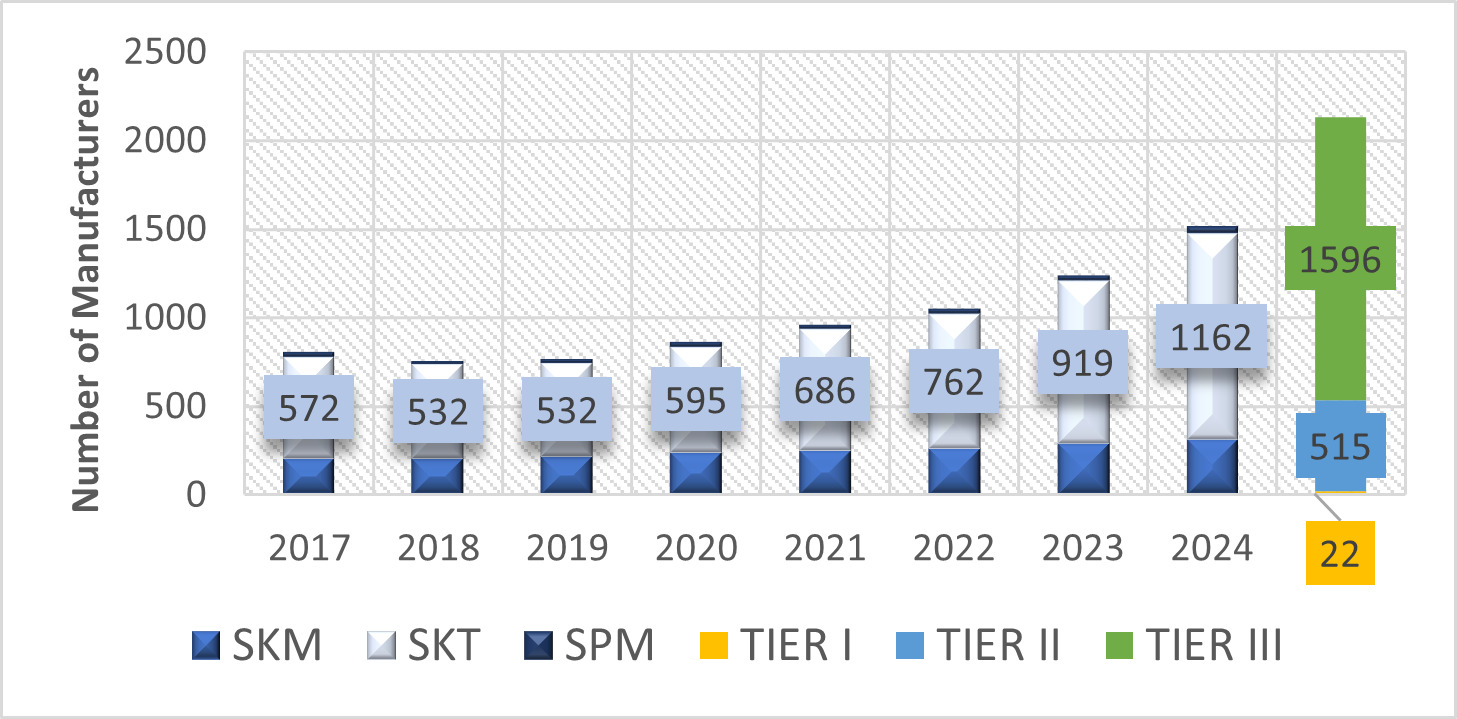
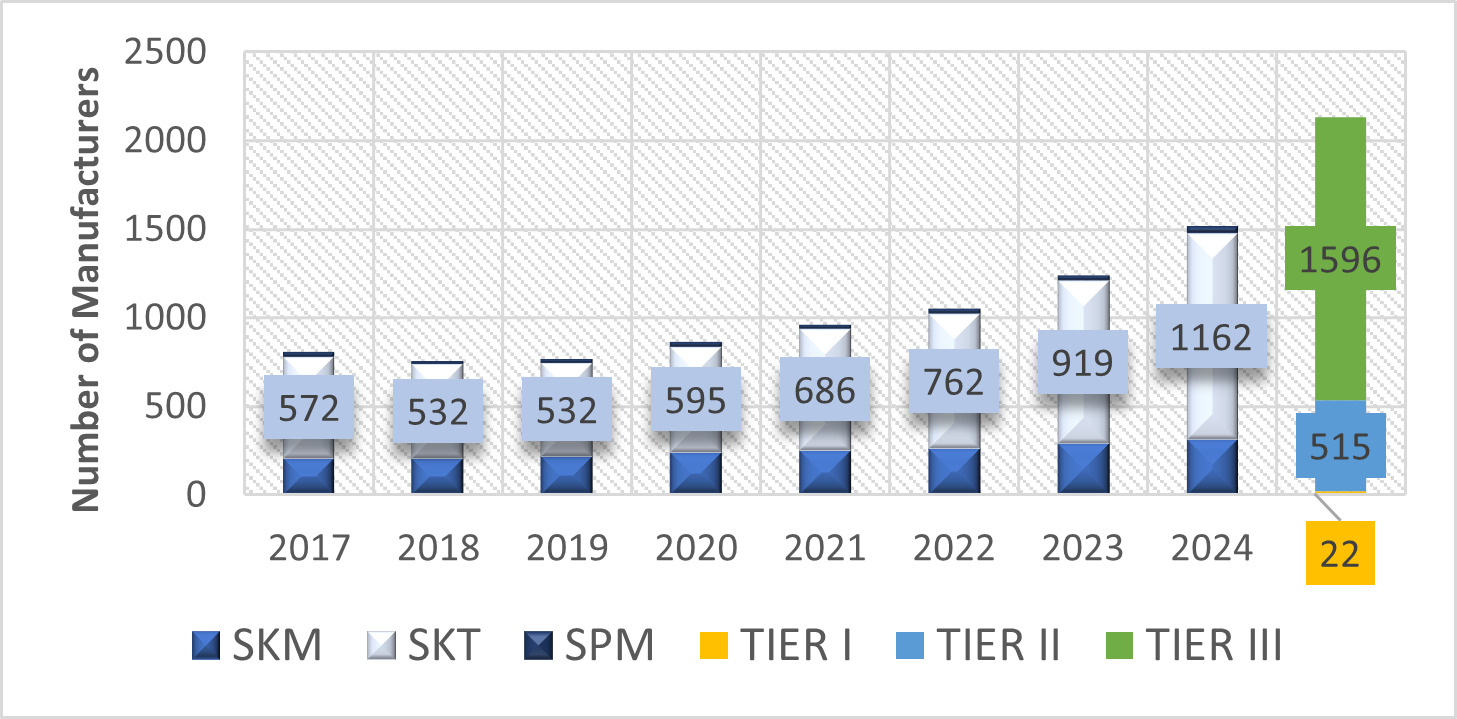
In legislative debates, the SKT segment is frequently invoked to justify the continued use of tier differentiation in Indonesia’s tobacco excise system, particularly on the grounds of producer equity and the preservation of local economic stability (Ahsan et al., 2021). This argument is reinforced by administrative data showing that SKT consistently accounts for the largest number of registered cigarette manufacturers over the 2017–2024 period (Figure 8), leading policymakers to perceive excise simplification as disproportionately burdening small and regionally embedded producers. While DGCE data on registered manufacturers provide a reasonable proxy for the SKT segment, the lack of employment data specific to SKT is an important limitation that warrants acknowledgment. As an alternative indication, Statistics Indonesia reports that employment in micro and small manufacturing declined from 1.33 million workers in 2017 to 1.28 million in 2024 (BPS, 2024). Although not SKT-specific, this trend suggests potential labour contraction among small-scale producers, which may be relevant when assessing the socioeconomic impacts of excise policy reform. Consequently, these industrial and labour concerns strengthen legislative resistance to reform, even as empirical evidence demonstrates that the multi-tier system increasingly facilitates downtrading and undermines both revenue performance and public health objectives (Sarjana & Adrison, 2024).
Nevertheless, despite the numerical dominance of SKT manufacturers, particularly in the lowest tier (Tier III), market concentration remains a structural issue in Indonesia’s oligopolistic tobacco industry, where a small number of large firms continue to exert substantial control (Arifin, 2021). This condition is partly attributable to PMK No. 97/2024, which links eligibility for the lowest excise tariff to production capacity within each cigarette category, thereby allowing established manufacturers to strategically manage output to retain preferential rates. To address this risk, the DGCE has sought to strengthen oversight through periodic tariff evaluations under PER-19/BC/2024 and by increasing reliance on Minimum Retail Selling Prices (HJE) as a mechanism to limit strategic pricing and mitigate market distortion.
Beyond distributional considerations, these findings show that political hesitation is further shaped by concerns that excise simplification and higher effective tax burdens could incentivise shifts towards illicit cigarette production, which operates outside the excise system and offers higher profit margins. While such concerns are not unfounded, experience from the Philippines demonstrates that these risks can be managed when strong presidential commitment reframes tobacco taxation as a public health–oriented sin tax, accompanied by continued tier reduction and strengthened enforcement, including enhanced regulatory frameworks, institutional capacity, and human resources for market surveillance (Center for Indonesia’s Strategic Development Initiatives (CISDI), 2025; Madore et al., 2015). In Indonesia, this executive orientation is already articulated in the RPJMN 2025–2029; therefore, the remaining challenge lies primarily in improving inter-ministerial coordination and enforcement capacity to sustain the reform window for excise simplification.
5.3. Policy stream: the emerging reform window
Within the MSF, the policy stream refers to the availability of feasible and credible solutions once a policy problem has been clearly identified. In Indonesia, excise simplification has long been acknowledged as a technically sound option; however, policy implementation has largely emphasised annual tariff increases rather than structural reform (Widoyoko et al., 2022). Although the number of excise tiers was reduced from 19 in 2012, more than a decade later the system still retains eight layers, thereby limiting the effectiveness of reform. Consequently, this persistent complexity enables producers to operate strategically across tariff categories and allows consumers to sustain consumption by shifting to cheaper products, structurally reinforcing downtrading.
Moreover, the empirical findings indicate that fragmentation within the excise structure itself weakens price signals, expands the availability of affordable cigarettes, and ultimately undermines both revenue performance and public health objectives. In this context, simplification emerges as the most coherent policy response, as it can narrow price differentials, constrain strategic production behaviour and strengthen tax incidence (WHO, 2021). Nevertheless, its adoption remains politically constrained by concerns over the large number of registered small manufacturers in the SKT segment, as well as apprehension regarding market concentration and illicit trade expansion (Ahsan et al., 2021). Importantly, interview evidence suggests that the classification of ‘small producers’ warrants closer scrutiny, given that some entities are effectively controlled by larger firms, thereby weakening the equity-based rationale for maintaining tier fragmentation (Sarjana & Adrison, 2024).
Against this backdrop, persistent downtrading, declining high-tier excise revenue and renewed executive commitment under the RPJMN 2025–2029 jointly signal the emergence of a concrete reform window for excise simplification. While a technically viable policy solution is already available, its realisation hinges on consolidating political support through stronger inter-ministerial coordination, enhanced anti–illicit trade enforcement and more accurate producer classification.
Based on this study, to more effectively curb illicit cigarette production and trade, enforcement should focus more on strengthening tax stamp control by adopting a technology-enabled and risk-based approach led by the DGCE. Tax stamp control, as the main tool for identifying illicit cigarettes, needs to be strengthened through digital excise stamps equipped with QR-codes or mobile-based verification systems that are accessible not only to inspectors but also to consumers and retailers, thereby reducing information asymmetry and discouraging counterfeit use. These measures should be complemented by targeted and phased public outreach, based on regional and consumer segmentation, to improve awareness, reduce demand for illicit cigarettes and enhance overall compliance. At the same time, DGCE should intensify end-to-end supervision of cigarette production and distribution, from excise stamp applications and declared production capacity to retail sales, while prioritising high-risk producers, misclassification practices and unregistered rolling machines.
From an MSF perspective, the alignment of problem recognition, political leadership and policy readiness creates a decisive opportunity for structural reform. To sustain this window, Indonesia must more assertively align with WHO Framework Convention on Tobacco Control (FCTC) principles, particularly by strengthening safeguards against tobacco industry interference to preserve policy credibility and long-term reform integrity.
6. Conclusion
Indonesia’s tobacco excise problems are structural rather than cyclical, as reflected in persistent downtrading, widening price dispersion, declining upper-tier revenue and growing illicit-market exposure under a fragmented excise regime. These dynamics underscore the diminishing effectiveness of repeated rate increases without structural reform, making gradual excise tier simplification a necessary and evidence-based response. While legal downtrading is a rational consumer reaction to higher prices, policy failure arises when substitution shifts to illicit products; therefore, simplification must be embedded in a broader governance framework that integrates enforcement, industrial adjustment and labour transition safeguards, consistent with Indonesia’s institutional context and WHO guidelines.
From an MSF perspective, a credible policy window for excise simplification is likely during the early implementation of the RPJMN 2025–2029, when problem urgency aligns with viable policy alternatives and strong political commitment. This window is reinforced by continued system underperformance, the maturity of technical reform designs and explicit support in national planning documents. To capitalise on this window, the government must translate presidential leadership into effective inter-ministerial coordination through a phased reform roadmap that aligns fiscal objectives with industrial restructuring, labour protection and enforcement capacity. In the long term, if managed coherently, this window can anchor a balanced excise reform trajectory that advances Indonesia’s four core excise pillars.
6.1. Research limitations
This study adopts a qualitative approach based on policy documents, secondary fiscal data and stakeholder interviews, which enables in-depth analysis of excise policy dynamics but also entails several limitations. The findings are confined to the 2017–2025 period and therefore may not reflect behavioural or fiscal developments following more recent regulatory changes. In addition, interview-based evidence is inherently subject to interpretive and response bias, particularly given the political sensitivity of tobacco excise reform. The analysis further concentrates on the three dominant cigarette categories, SKM, SKT and SPM, so patterns in other tobacco products are not fully captured. Data-related constraints also affect the analysis. Secondary sources from government and open-access databases vary in coverage and granularity, and the absence of detailed production data by tariff tier or HJE thresholds necessitated analytical assumptions when examining revenue and consumption trends. While these limitations may reduce quantitative precision, their impact was mitigated through triangulation across data sources and methods.
Acknowledgments
The authors would like to express their sincere gratitude to the Politeknik Keuangan Negara STAN (PKN STAN) and Secretariat General, Ministry of Finance of Indonesia for providing institutional support and research permission that enabled the completion of this study. Appreciation is also extended to all interview participants, including representatives from government institutions, academics, industry, practitioners, NGO and also consumer groups, who generously shared valuable insights and information that enriched the analysis.
CK-1 refers to the administrative document used to order excise stamps for tobacco products, submitted to the DGCE by manufacturers as the basis for the provision of excise stamps and the assessment of excise liability.
A directorate under Indonesia’s Ministry of Finance responsible for implementing customs and excise policies, including tariff design and enforcement.
Machine-made clove cigarettes produced using industrial machinery by mixing tobacco with cloves or their parts (natural or artificial). This category represents large-scale production within Indonesia’s excise system.
Hand-rolled clove cigarettes, made by manually blending tobacco and cloves. SKT products are typically produced by small and medium enterprises and belong to lower excise tiers.
A framework developed by John W. Kingdon, which conceptualises policymaking as the interaction of three semi-independent streams (problem, policy and politics) which must align during a window of opportunity for an issue to enter the decision agenda (Béland & Howlett, 2016)
Machine-made white cigarettes, produced without cloves, kelembak, or incense mixture. This category generally targets upper-income consumers and is subject to higher excise rates.
A directorate general under the Indonesian Ministry of Finance (known domestically as DJSEF), established as a restructuring of the Fiscal Policy Agency (Badan Kebijakan Fiskal or BKF). It is responsible for formulating, analysing and evaluating economic and fiscal strategies, including excise policy development.
PMK (Peraturan Menteri Keuangan): Regulation of the Minister of Finance, serving as the primary legal basis for setting excise tariffs and administrative procedures.
Minimum retail selling price used to determine excise tiers and prevent underreporting of cigarette prices.
The Draft State Budget of Indonesia, detailing projected revenues and expenditures, including excise revenue targets.