1. Introduction: an inflection point in border management
Border management is undergoing two disruptions: the end of the current era of globalisation and the rise of modern AI systems that enable far more sophisticated border management than previously possible (Kafando, 2020; Vijayakumar, 2025). The border has thus dramatically increased in importance as a national strategic asset at the same time as AI systems have appeared that can handle the resultant complexity at unprecedented scale, accuracy and explainability.[1]
The fragmentation of the global system represents a profound transformation as globalisation gives way to a more conflicted world order. Economic ties between nations are no longer being assessed for efficiency alone, as they were post-Cold War, but for strategic risk, resilience, national advantage and economic security (Aiyar et al., 2023). Organised crime is flourishing in a more fragmented world system. Following a generation of counterterrorism focus after 9/11, existing paradigms – centred on inspection at physical checkpoints, risk assessment of linear movements of goods and reactive post-hoc enforcement – are no longer sufficient to manage the complexity of 21st-century trade and mobility (HM Government, 2023). The border, once seen as a static boundary line of sovereign demarcation and control, has become a dynamic interface with global supply chains, geopolitical risks and complex data flows. To facilitate global trade and grow resilient national economies, new approaches are needed.
Amid a fragmented world order and accelerating technological change, Customs and related border agencies face an expanded multi-dimensional imperative to (a) secure the nation against dangerous and illicit cross-border flows; (b) enable the smooth flow of legitimate commerce, including surging e-commerce movements; (c) ensure compliance with diverse regulatory demands, often across competing governmental regimes; (d) detect grey-zone and hybrid threats that exploit cross-border systems; and (e) ensure economic security through understanding and securing cross-border, often multi-tier supply chains (Mein, 2025; Outram, 2026; Yu, 2018).
Together, these factors require that the border be managed as a critical node in national security, public trust and global commerce. The border must be viewed and managed as a strategic asset.
Part 1 of this paper examines these global trends and their impact on how the border must be managed in the modern age (Polner, 2011). Part 2 expands upon Vijayakumar (2025), Kafando (2020), Kim and colleagues (2020) and the published successes of countries such as the United States and Brazil (Filho, 2024; Kafando, 2020; Kim et al., 2020; United States Department of Homeland Security, n.d.; Vijayakumar, 2025) by demonstrating the cutting-edge AI systems developed by the authors that leverage both Generative AI and classical machine learning to tighten the border management OODA (observe, orient, decide, act) loop (Boyd, 1986), equipping border agencies and trusted private actors to operate with shared visibility and mission-aligned agility. Federated deployment catalyses inter-state and public-private collaboration, positioning states to continue global trading relationships while preserving national security in an era of fragmentation (Bersin et al., 2025).
Part 1: Border strategy for the modern age
2. Global trends defining the inflection point for border agencies
The COVID-19 pandemic, climate-related shocks and rising geopolitical tensions have exposed the fragility of global supply chains. Critical goods – from semiconductors to pharmaceuticals – have faced severe disruptions (Frieske & Stieler, 2022; United Nations Trade and Development, 2021), while illicit networks continue to exploit opaque trade flows for profit and influence (World Customs Organization (WCO), 2024). For modern border management, four key converging trends create an inflection point for modern border agencies, as follows.
2.1. Geopolitical fragmentation
The world is transitioning from a unipolar to a multipolar order. Great power competition, regional fragmentation and the increasing weaponisation of economic interdependence have eroded the global consensus around free and open trade. Tariffs, sanctions, export controls and investment screening – once exceptions – are now instruments of national strategy (Abdullahi et al., 2025). Borders are used increasingly to assert sovereignty, project influence and manage risk, often at the expense of trade facilitation and efficiency (World Trade Organization (WTO), 2025).
2.2. Economic security and strategic autonomy
The growing importance of economic security has elevated borders as strategic national assets (Outram, 2026). Borders now sit at the intersection of global integration and sovereign control. States desire to both collaborate and trade while avoiding vulnerability through interdependence. With the rise of the WTO and free trade agreements, borders were reshaped into facilitated conduits for commerce – their primacy as instruments of security and revenue collection has now reasserted itself.
Today’s definitions of economic security align with national security objectives, industrial development and broader geoeconomic positioning (Wolf, 2025). The shift is from managing the border as a point of compliance to leveraging it as a platform of national strategy – understanding extended national dependencies and ensuring resilient economies with secure access to essential inputs.
2.3. Supply chain complexity and illicit flows
The previous era of globalisation has incubated large-scale multinational criminal organisations that are further empowered by decreased international cooperation (Gordhan, 2007; Widdowson, 2007). Global supply chains span dozens of countries and involve vast, decentralised networks of suppliers, intermediaries and logistics providers. Organised crime networks exploit the resultant opacity to move contraband, evade duties and launder profits through formal financial channels, trade-based schemes and, increasingly, virtual assets (Financial Action Task Force, 2018). In Europe, for example, law enforcement reporting highlights how drug trafficking has become a major driver of corruption and serious violence around port logistics hubs, demonstrating how supply-chain opacity translates into wider community harms (Europol, 2024). Illicit trade has always existed, but its scale has grown dramatically while the multilateral frameworks designed to combat it have weakened (Dandurand, 2025; Global Financial Integrity, 2025; Organisation for Economic Co-operation and Development/European Union Intellectual Property Office, 2025; United Nations Office on Drugs and Crime (UNODC), 2010).
There is also growing evidence of state actors leveraging supply chains and criminal networks for covert interference (McCallum, 2025; Tremmel, 2026), creating disruption risks for critical infrastructure and blurring the boundary between criminality and state-linked activity (Reuters, 2026). Risks extend to outbound flows as well; criminal actors operate with the scale of legitimate multinationals (UNODC, 2010). Dual-use technologies, precursor chemicals and strategic commodities can pose equal threats when diverted, requiring the same supply chain transparency applied to imports (WCO, 2023).
Threats from both organised crime and state actors are thus distributed throughout the multiple tiers of supply chains. Border management agencies must see and act beyond the border to the full value chain to prevent, rather than just intercept, harmful activity at the physical border.
2.4. Expanding mandates and public expectations
Finally, modern border agencies are no longer tasked solely with controlling goods and collecting revenue. They are now frontline actors in areas such as public health (pandemic control), climate enforcement (carbon accounting and green trade), human rights (forced labour interdiction) and national security (cyber, migration, transnational serious and organised crime and terrorism) (Gordhan, 2007). Increasingly, they are also operating at the front lines of economic and geopolitical statecraft, playing critical roles in detecting and enforcing sanctions breaches, identifying dual-use goods, countering economic coercion and managing the complex risk environment posed by grey-zone tactics and hybrid threats (HM Government, 2020). Public expectations for security, fairness and sustainability are rising, with less tolerance for gaps between agencies and systems, even as agencies struggle with limited resources, fragmented mandates and legacy systems. Widdowson (2007) and Polner (2011) highlight the need for cross-agency Coordinated Border Management (CBM), and the demands have only become more severe since 2011 (Polner, 2011).
Part 2: From strategy to infrastructure: Enabling the modern border
The challenges outlined in Part 1 demand a new approach: border management as a collaborative, data-driven, mission-integrated system capable of managing flows at massive scale across global value chains. Three characteristics render traditional approaches insufficient.
First, scale: global trade now involves billions of annual transactions across hundreds of millions of commercial entities. No inspection regime or human analytical capability, however well-resourced, can manually assess or analyse more than a fraction of cross-border flows. Traditional risk-based targeting, while an improvement over random inspection, still operates on declared data at the border – a fundamentally limited observation window. Deeper analysis of multi-tier trading relationships adds in orders of magnitude of scale.
Second, complexity: the risks that modern border agencies must detect are embedded in multi-tier supply chains spanning dozens of jurisdictions. Forced labour violations occur at third- or fourth-tier suppliers. Carbon emissions accumulate across production networks. Sanctions evasion routes through shell companies and transshipment hubs (OECD, 2018, OECD, 2021). Economic security threats are expressed in bottlenecks many tiers deep. These risks are invisible to systems designed around bilateral shipper-consignee relationships and cannot be captured in static rule sets.
Third, velocity: the threat landscape now shifts faster than traditional policy and targeting cycles can adapt. Criminal networks restructure in response to enforcement. Trade policies change with geopolitical events. New regulations – including the European Union Carbon Border Adjustment Mechanism (CBAM), United States Uyghur Forced Labor Prevention Act (UFLPA) and the European Union Deforestation Regulation (EUDR) – impose compliance requirements that did not exist five years ago. Agencies need systems that learn and adapt, not systems that encode yesterday’s assumptions.
Together, these characteristics define a problem space that exceeds human cognitive capacity and traditional rule-based systems. Meeting these challenges requires infrastructure that can: ingest and harmonise messy, multilingual data at scale; construct dynamic maps of global production and distribution networks; detect anomalies and risk patterns across extended value chains; and provide explainable, legally defensible decisions in real time.
These capabilities have only recently become feasible, through advances in knowledge graphs, large language models and explainable AI.[2] Federated learning allows jurisdictions to collaborate on risk intelligence without surrendering data sovereignty (Doshi-Velez & Kim, 2017; Hogan et al., 2021; McMahan et al., 2017). Together, these advances transform the border from a chokepoint into an intelligent node in a globally connected system of visibility, risk orchestration, and coordinated action (Filho, 2024; Kafando, 2020; Kim et al., 2020; Vijayakumar, 2025). AI, best deployed as hybrid systems combining generative and non-generative techniques, represents a step change over previous approaches. Section 4 applies this approach by showing how modern AI can tighten the border management OODA loop.
3. AI-Enabled Observe, Orient, Decide, Act (OODA) Loops
The challenges presented in Part 1 require a full understanding of and action upon the value chain of the goods crossing the border. Modern AI’s ability to explainably master complexity at scale across fragmented global systems enables approaches such as Value Chain Management (VCM, also known as Integrated Supply Chain Management ISCM) (WCO, 2004) through a much tighter OODA loop. These systems work successfully across a wide range of countries, including in the USA, Brazil, India, Nigeria and China (Bersin et al., 2025). Based on an underlying source of truth always tied back to original documents, AI enables:
-
Observation: each individual item crossing the border can be understood with either a probabilistic (inferred) value chain or via a submitted product passport detailing the value chain.[3] This product passport can be verified and checked for errors and misrepresentations by AI systems. AI harmonises the underlying information at scale, creating a system of record detailing the supply chain map without requiring unique identifiers to be adopted globally. Federated systems allow transfer of only required information between parties, enabling shared visibility while respecting data sovereignty, privacy and security.
-
Orientation: using the constructed value-chain network understanding, AI systems enable ranking and triage of goods to either be expedited in green lanes or targeted for inspection.
-
Decision: Recommended actions are presented by the AI systems based on the above triage. In some cases, automatic actions are taken, in other cases humans are in the loop. In some regulatory environments an explanation must be given for the recommended actions, while in others such explanation is at the discretion of the system designer (Nannini et al., 2023). In practice, high-performing AI systems increasingly surface an evidentiary explanation tied to a regulatory basis, both to satisfy due process where required and to build trust and auditability.
-
Action: An action (facilitation, inspection, denial of entry, request for more information, etc.) is taken. The results of this action restart the loop.
Over time, the system improves both facilitation and enforcement by learning from outcomes and intelligence feedback loops, supporting the shift from transaction-based screening to networked targeting. This enables agencies to influence flows across the entire trade lifecycle, emphasising upstream engagement and structured collaboration as envisioned by the WCO’s SAFE Framework of Standards to Secure and Facilitate Global Trade (SAFE Framework; WCO, 2021).
Three interrelated AI capabilities enable this dramatically improved OODA loop, as follows.
3.1.1. Visibility
Border agencies must gain upstream and downstream visibility into supply chains – not just where a product is coming from, but how it was made, who handled it, and under what conditions. This expanded visibility continuum requires connecting customs data and border intelligence with private-sector systems, commercial data sets and third-party analytics providers. It also means developing the capacity to ingest, harmonise and interpret structured and unstructured data across jurisdictions. Visibility is no longer about border declarations, it is about supply chain provenance, behavioural indicators and dynamic threat detection.
This expanded visibility must also account for outbound flows and draws increasingly on data from IoT-enabled logistics infrastructure, blockchain-based provenance systems and financial transaction networks, reinforcing the importance of secure, federated approaches to data collaboration.
3.1.2. Risk orchestration
Risk must be understood as cumulative and networked across actors, processes and geopolitical developments, rather than being confined to single transactions. Agencies must move beyond reactive screening towards continuous pattern-based risk assessment, accounting for a trader’s history and a supply chain’s integrity. AI-enhanced systems and federated analytics can detect anomalies, forecast threats, prioritise interventions, automate compliance assessments and adapt dynamically as adversaries change behaviour. This capability will allow agencies to move from broad suspicion to focused disruption, focusing resources on high-risk actors and transactions while expediting lawful trade.
3.1.3. Coordinated action
Effective border management requires whole-of-government and public-private collaboration. AI enables scaled harmonisation, analysis and decision support that allows novel alignment of agencies (Customs, health, agriculture, labour, environment, security) around common goals and data models. By enabling coordination at scale, AI systems enable VCM approaches that also invite regulated entities – traders, carriers and technology providers – into a cooperative compliance framework. The goal is not just deterrence but systemic integrity, achieved through real-time information sharing, shared accountability and incentives for proactive compliance.
These principles build upon the WTO’s Trade Facilitation Agreement and the Authorised Economic Operator (AEO) model; what is new is the degree of integration, automation and strategic alignment now available.
3.1.4. Data sovereignty, privacy and security
Deploying AI systems and approaches such as VCM requires strategic ambitions to be matched by enabling architecture. Adoption in a fragmented world requires digital architectures that support distributed trust, real-time coordination and sovereign control (Del Giovane et al., 2023). Federated systems provide this foundation. Instead of pooling data centrally, algorithms move to the data, enabling secure collaboration across departments, jurisdictions, sectors and regulatory domains. The tools and techniques already exist to achieve this required security and sovereignty (for more details on federated systems and their benefits, see McMahan et al. (2017) and Bersin et al. (2025)).
4. Visibility/observation through AI harmonisation and imputation
Unlike earlier statistical or rules-based systems, today’s AI can learn from messy, multi-lingual and incomplete data to construct a dynamic, intelligent map of the global supply chain, surmounting the complexity of harmonising billions of records across all languages. In federated deployments, companies and governments can see their data integrated analytically and securely, without centralising raw data.
In harmonising data, governments often encounter the following data issues that impede collaboration even when sharing a common data model (such as the WCO Data Model; WCO, 2025):
-
Recognising and matching entities without unique identifiers. In other words, unifying representations of companies, addresses, ports, and products in many languages, robust to misspellings.
-
Identifying and correcting erroneous information, such as incorrect addresses, weights, values and Harmonized System (HS) codes.
-
Imputing missing information, whether that is missing product categories, address components, weights, values, or otherwise.
AI systems trained on billions of correct examples from federated deployments are the solution. They can process, for example, all the different ways to write the name of a given company in all major and most minor languages, and they can function in separate federated deployments (Table 1). This harmonised data serves as the underlying basis for human and machine action.
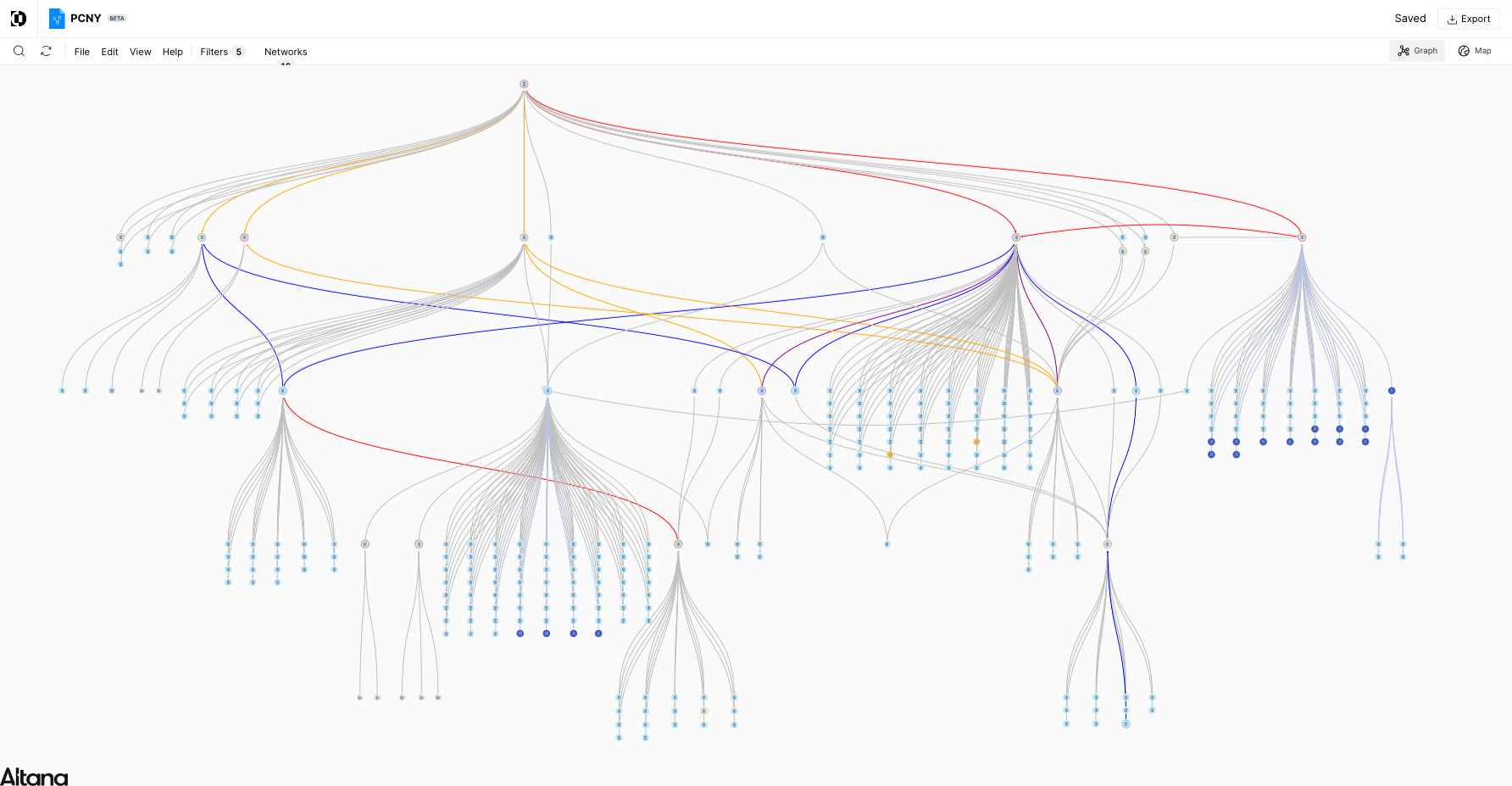
Such AI systems can thus process billions of transactions and hundreds of millions of entities across global supply chains and all geographies, enabling border and regulatory authorities to observe, focus, prioritise and act at a massive scale and precision not previously possible (Figure 1).
5. Orientation, decision and action
Once harmonised, such a map of network relationships and global value chains is still enormous in scale: billions of transactions linking hundreds of millions of entities. AI assists in identifying key areas of focus, whether that is goods that should be facilitated, narcotics production chains that should be targeted, or high carbon production chains that should be regulated. In other words, AI trained upon the comprehensive map of the global supply chain allows explainable targeting, facilitation, and more sophisticated analysis of shipments, companies and networks. Based on this analysis, both automated actions and collaboration across the extended connections of government, buyers, suppliers and service providers can be taken.
5.1. Securing the nation against illicit flows while facilitating legitimate commerce
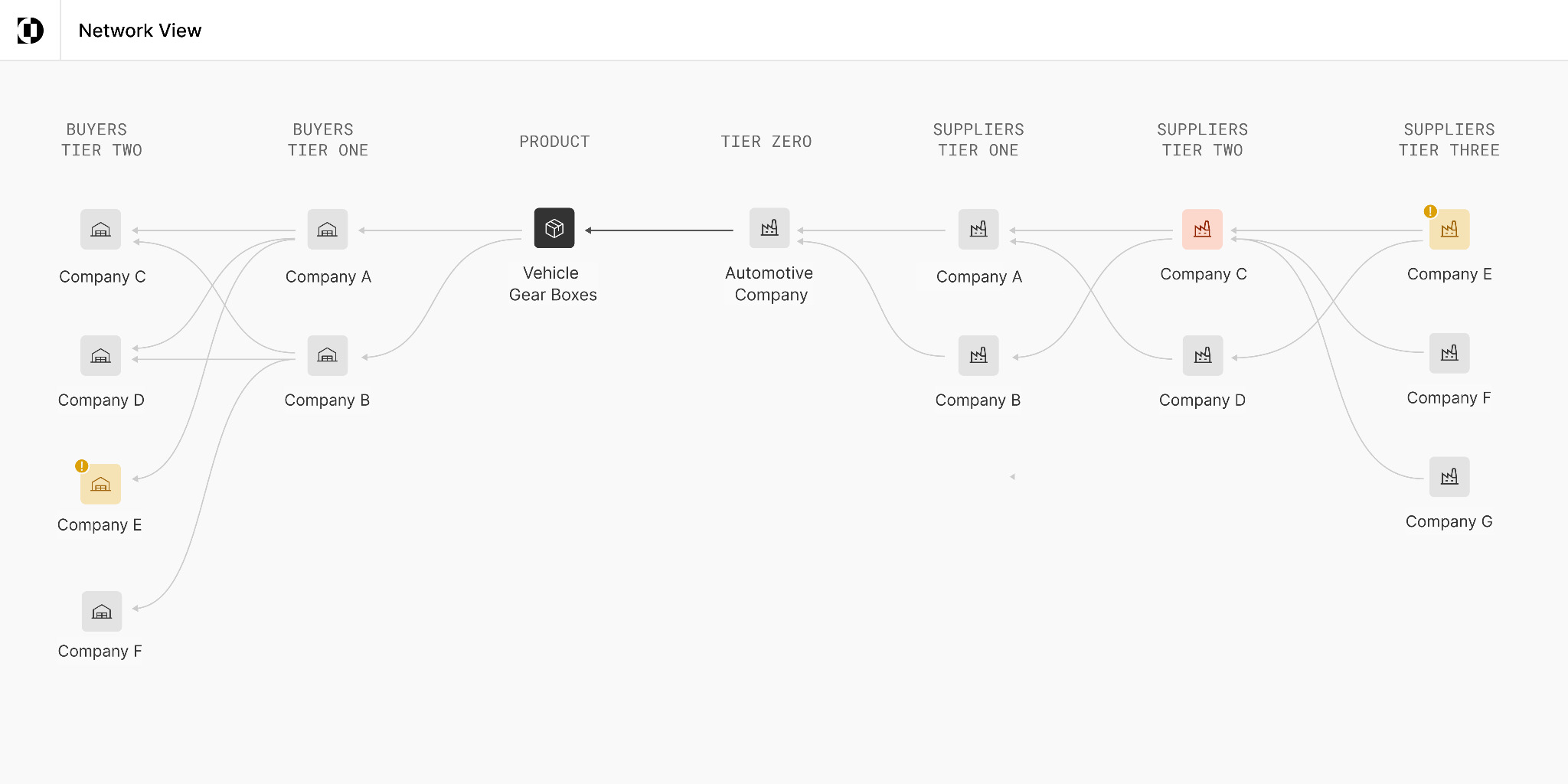
When a shipment crosses a border, the border agency would ideally construct and understand the value chain of that shipment in real time. This enables trade facilitation and compliance decisions grounded in the underlying shipment’s production and distribution context. By having a deep understanding of the multi-tiers of the shipped good’s value chain, machine and human systems can much more effectively detect discrepancies, estimate missing information and deal with ambiguity.
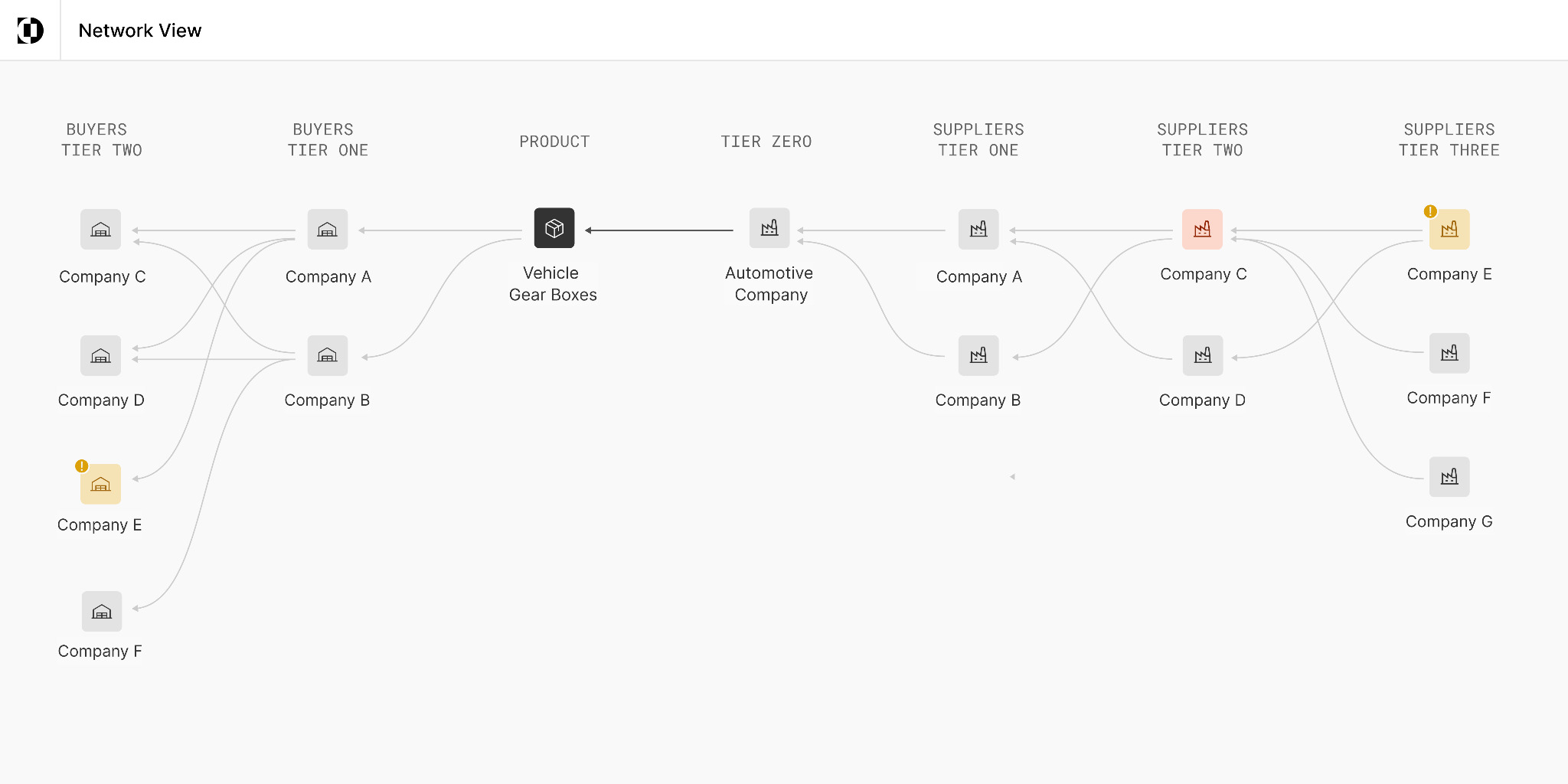
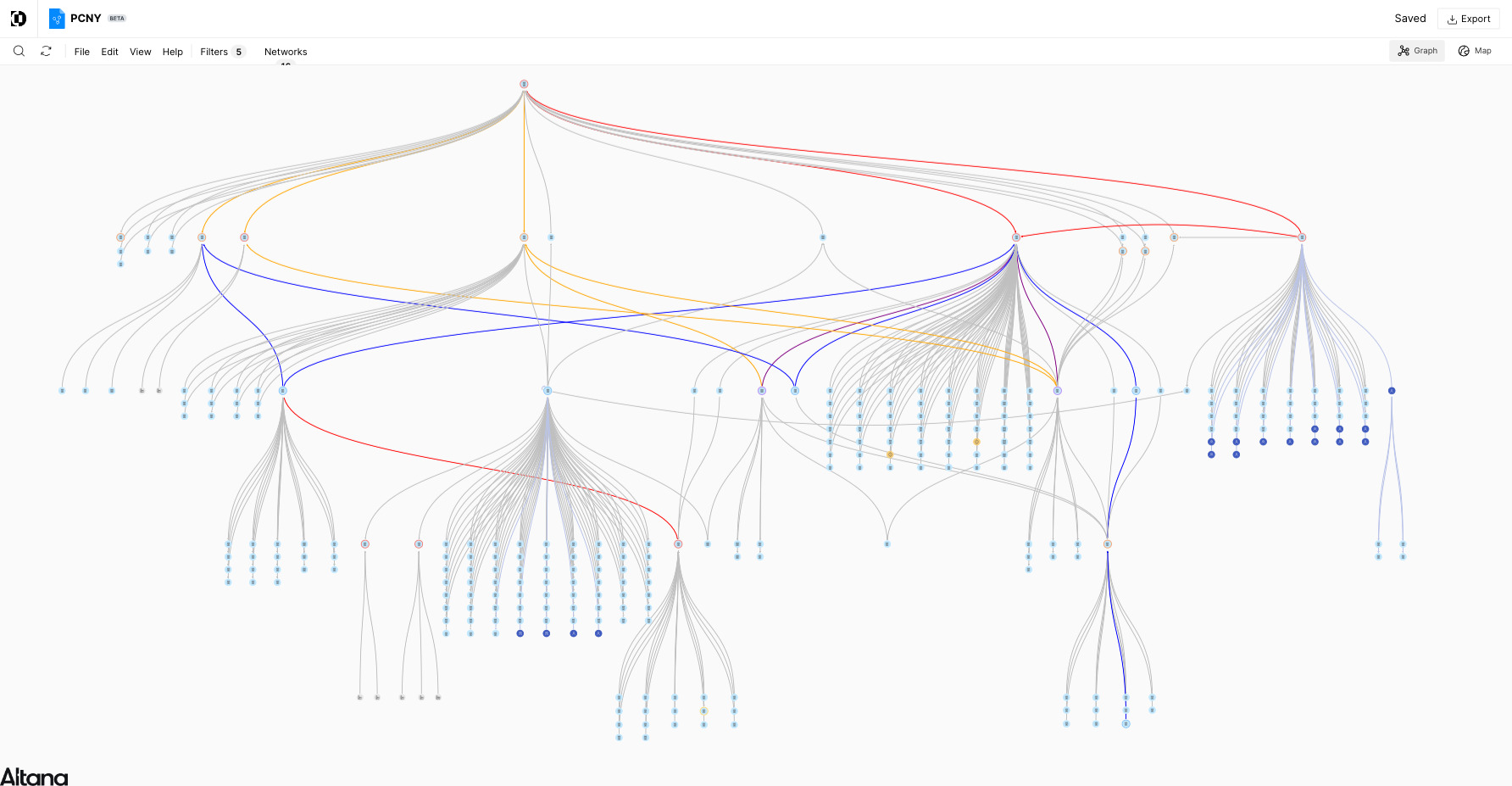
Humans can of course carry out manual assessment using the underlying map of the associated companies (Figure 2), including assessment of the malfeasance risk and suitability for AEO status.
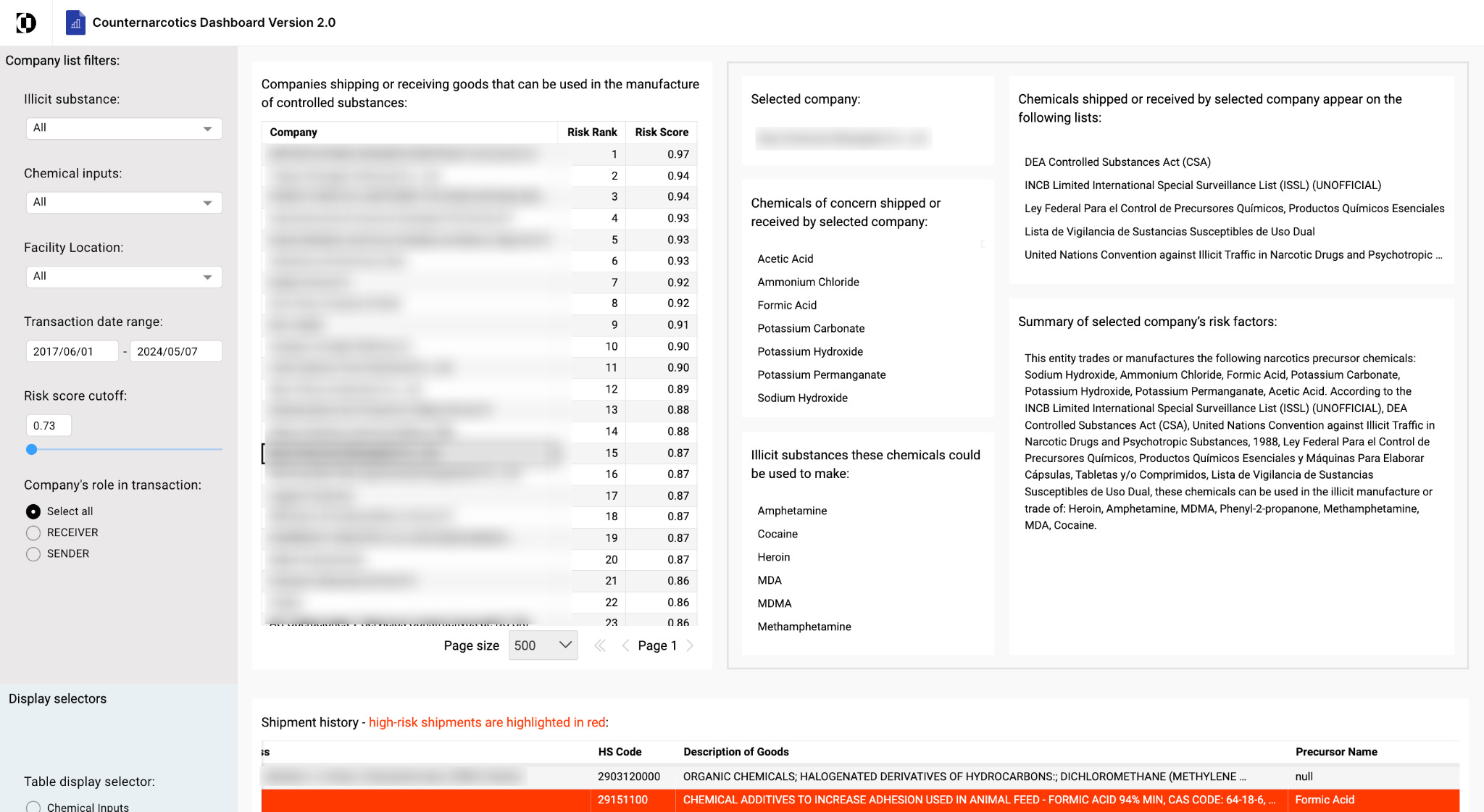
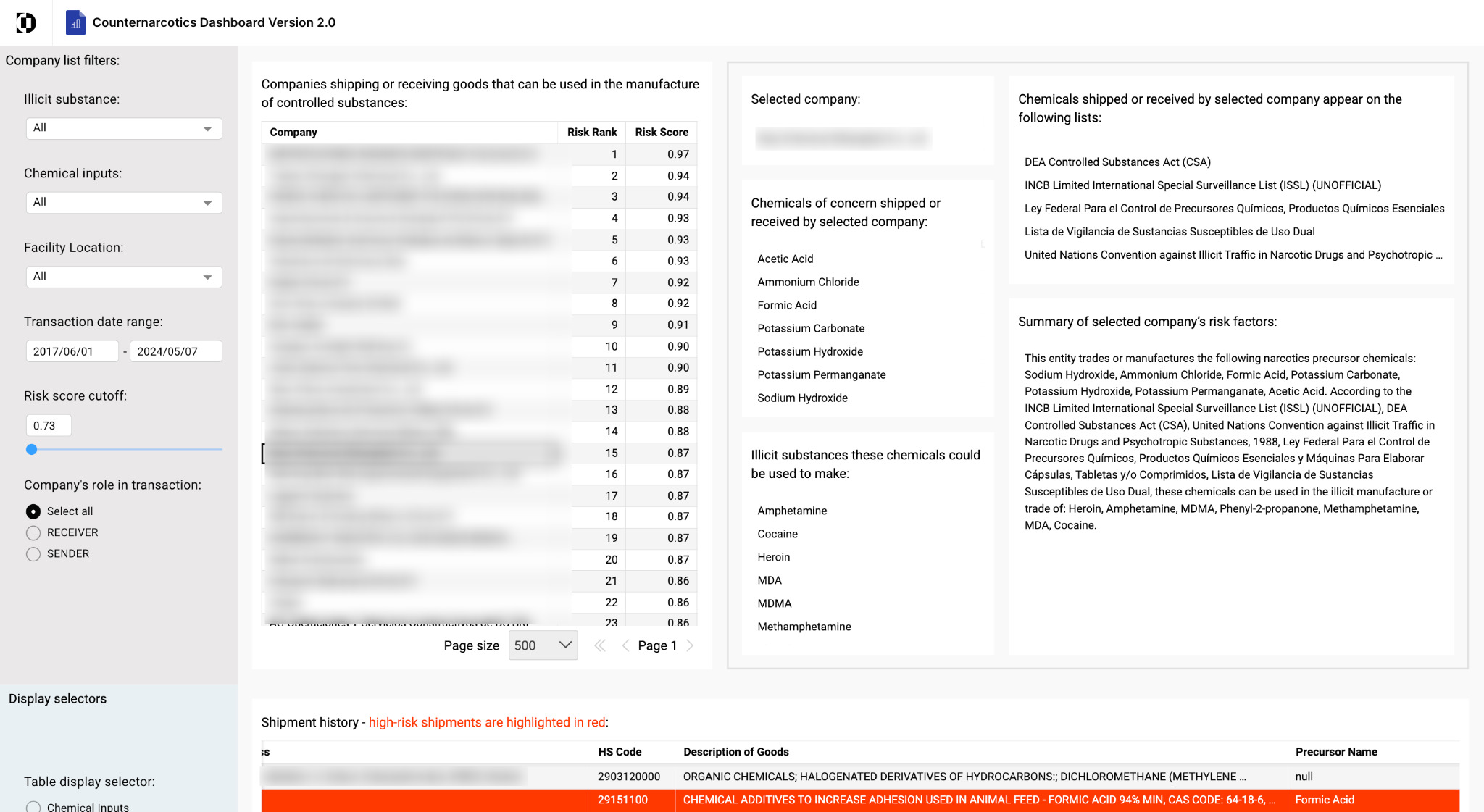
AI can assist more fully, providing both human-in-the-loop and full automation for trade facilitation and compliance at the level of companies, networks or individual shipments. Figure 3 shows AI decision support, with explainable AI backed by evidentiary information, in the targeting of illicit narcotics production. This system, produced by the authors, targets value chains, not just end distribution, and thus aims to disrupt production at scale, rather than focusing on final narcotics products where seizures do little, in general, to impact the behaviour of criminal organisations.
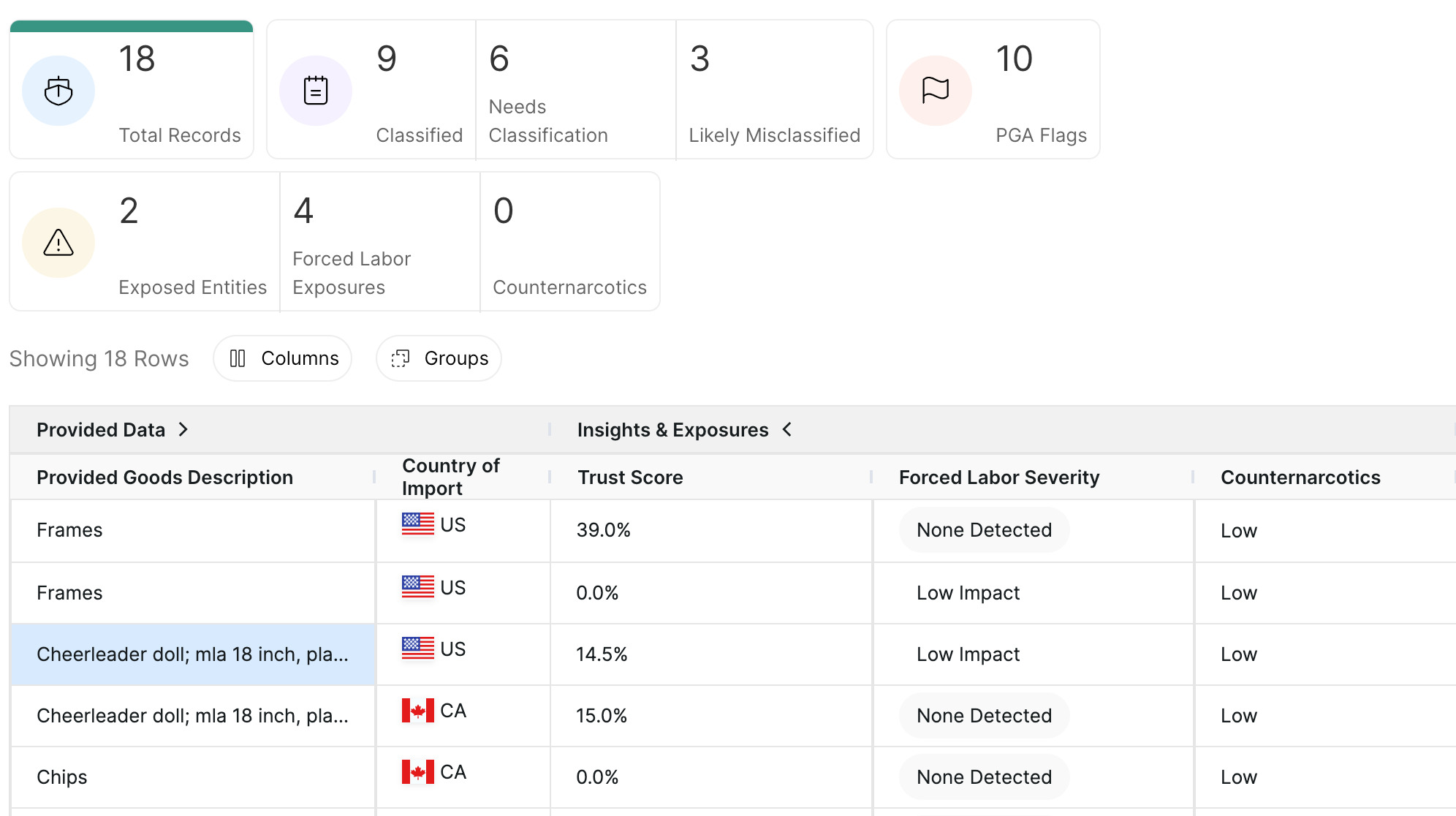
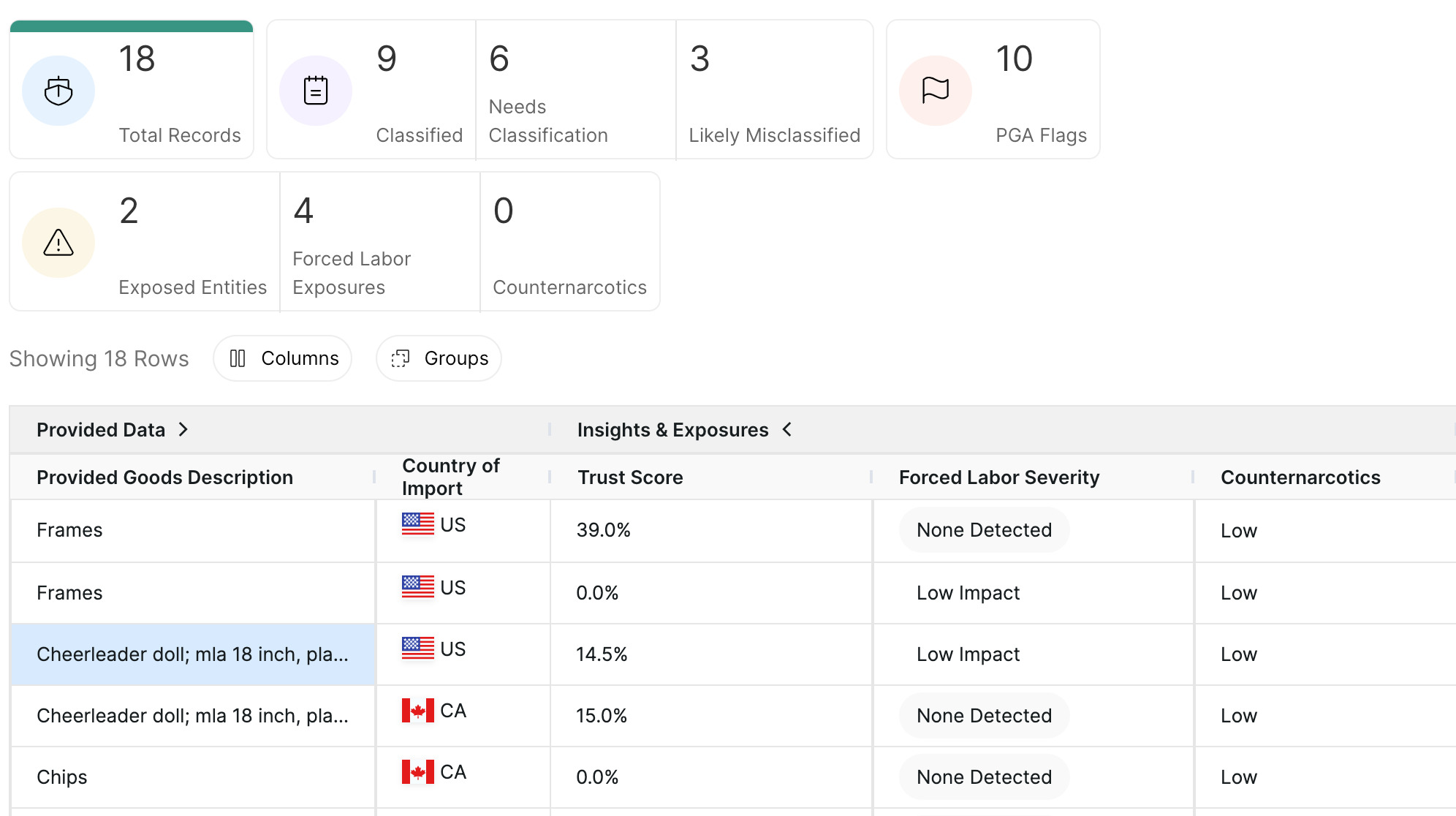
Full automation is also possible at the shipment level. Figure 4 demonstrates such a system, deployed via a high-throughput application programming interface (API), that assesses both trust and risk at scale. In one major economy, a trust score allowed 40 per cent of goods to move via a Green Lane with expedited crossings, while simultaneously targeting narcotics, forced labour, misclassification, misvaluation and other violations.[4]
5.2. Ensuring border revenue collection
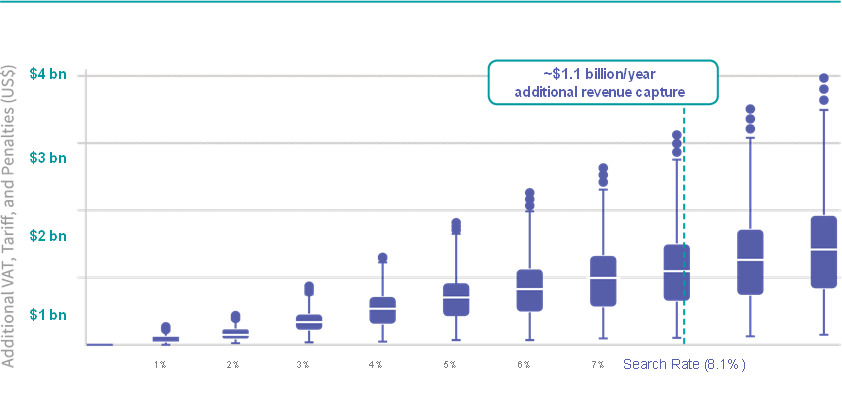
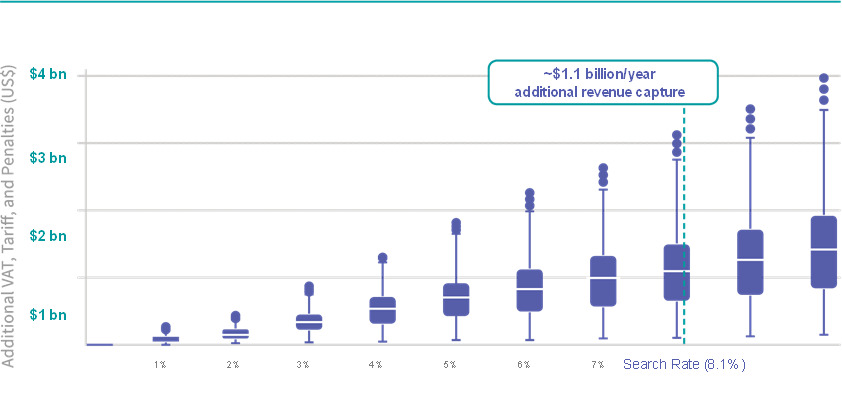
The same underlying authors’ systems allow identification of tariff compliance and non-compliance at scale. AI systems can identify valid HS codes, valuation ranges and country of origin, based on a federated evidentiary source of truth, allowing compliant goods to move quickly while improving revenue recovery and enforcement for non-compliance. Figure 5 shows results identifying an additional USD1 billion of missed tariff revenue in a major economy (based on reanalysis of shipments and associated value chains over a calendar year). The underlying models include misclassification, misvaluation and supervised learning informed by historical enforcement outcomes.
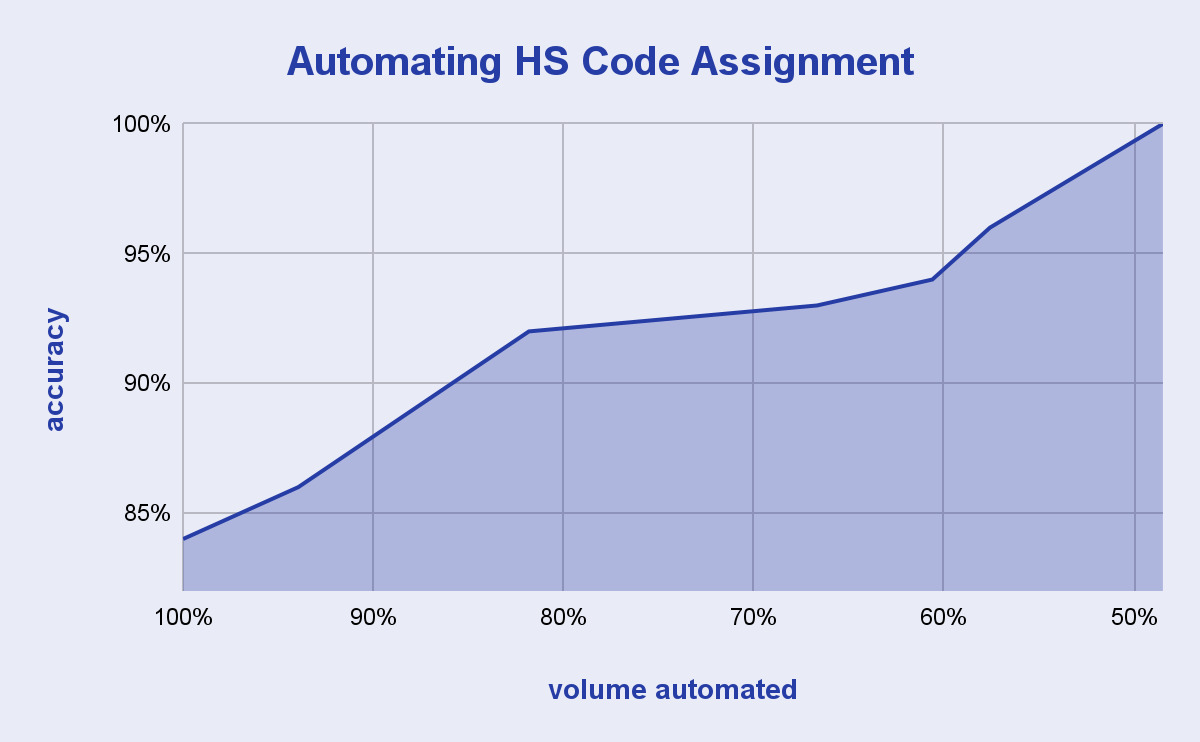
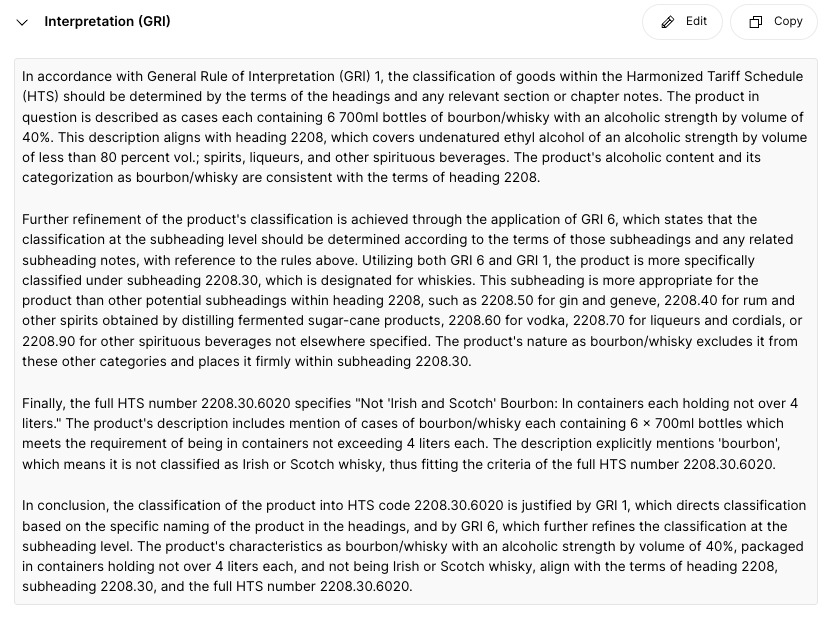
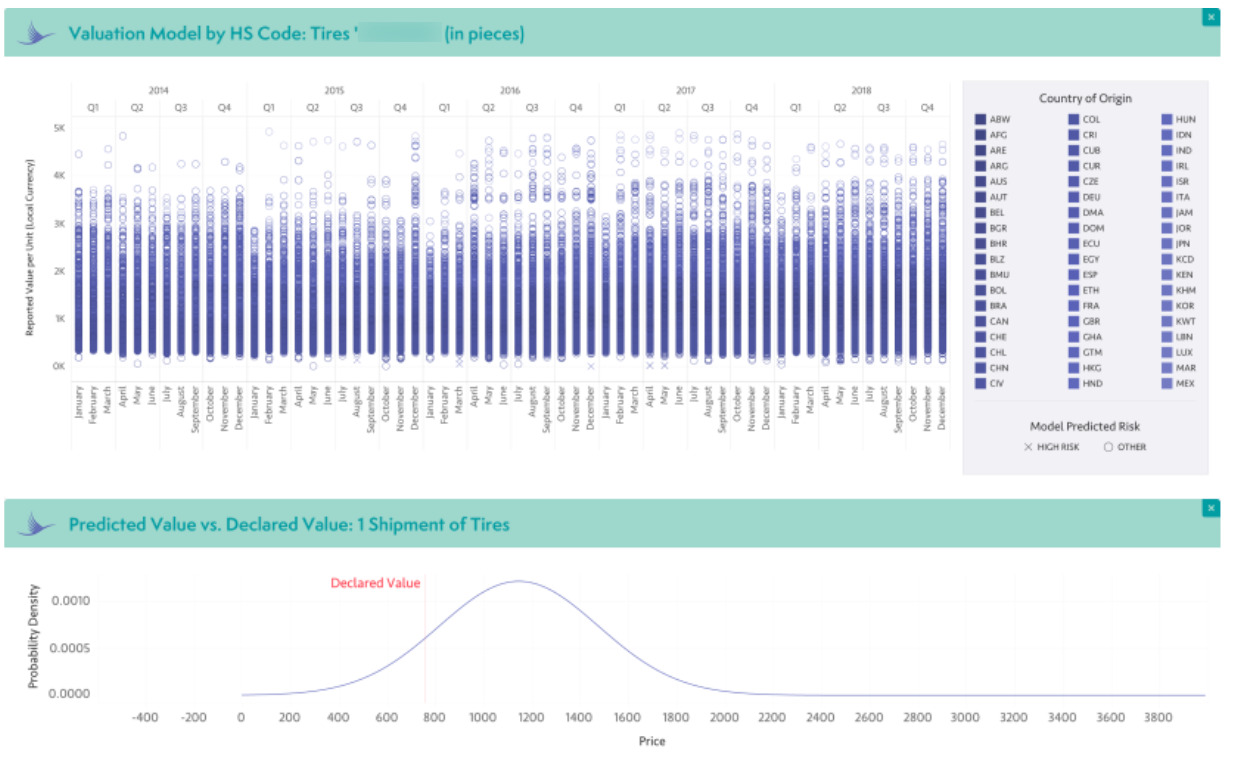
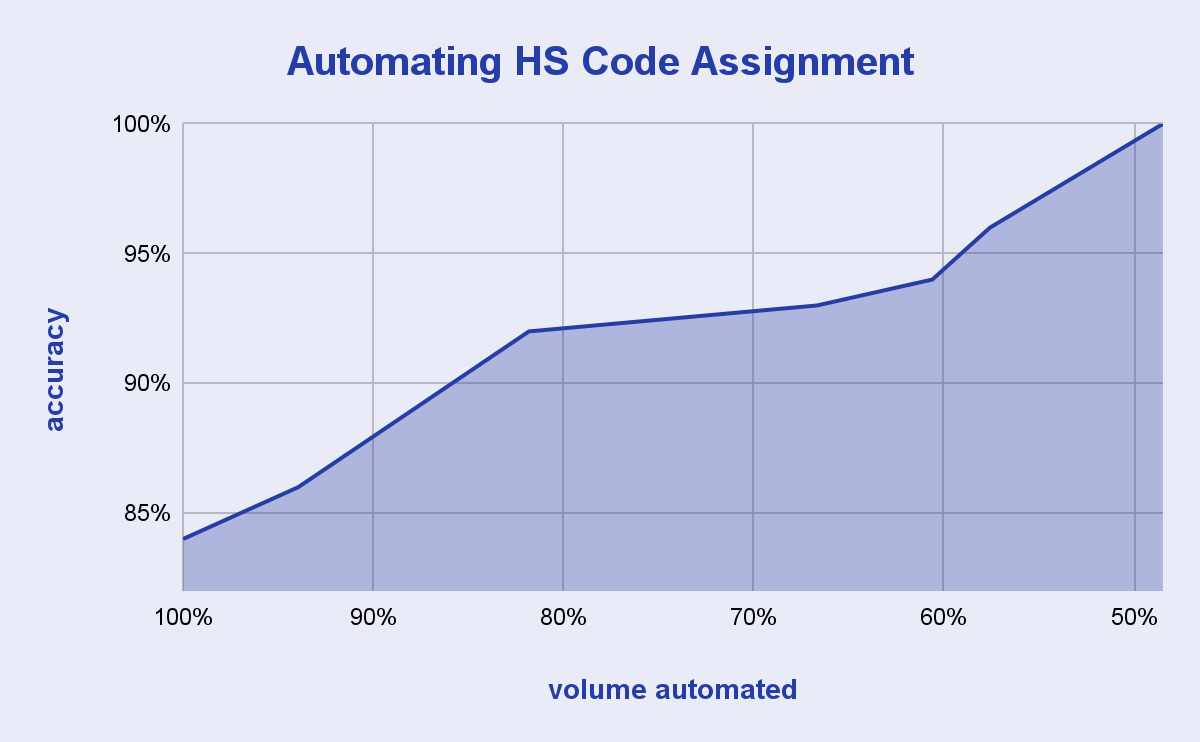
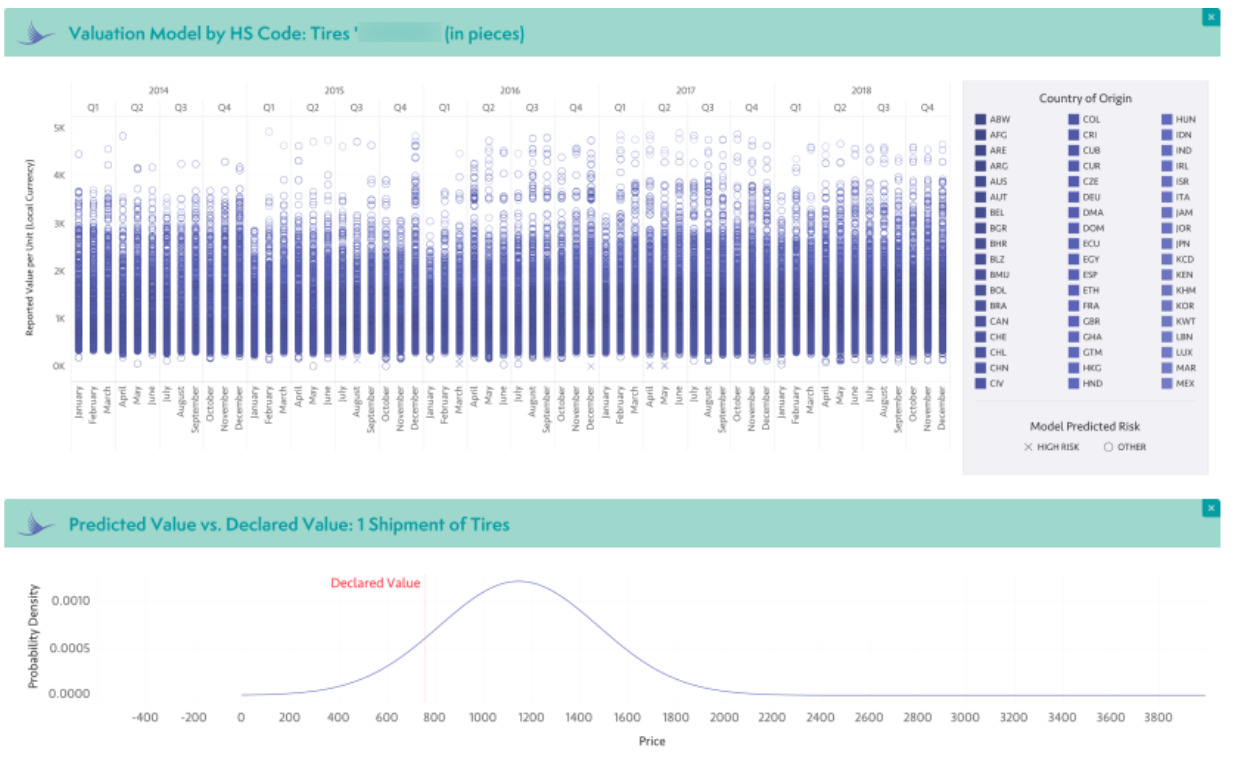
HS Code assignment and misdeclaration detection is shown in Figures 6a and 6b, expanding upon Chen and colleagues (2021) to the final digit of the national regulation (HS8, HS10, etc.) with legally based explanations. Misvaluation detection is shown in Figure 7, where predicting plausible HS codes and reasonable valuation ranges enables automatic facilitation and targeting. Kim and colleagues (2020) found similar success. Explanations align to the WTO Valuation Agreement methods (1–6), including identical and similar goods comparators.
_by_a_modern_ai_system_that_draws_fro.png)
5.3. Ensuring compliance with diverse regulatory demands
5.3.1. Environmental regulation
Environmental regulations such as the EU’s CBAM[5] and Deforestation Regulation require understanding the global warming and deforestation impact of imported goods across their entire multi-tier production chains.
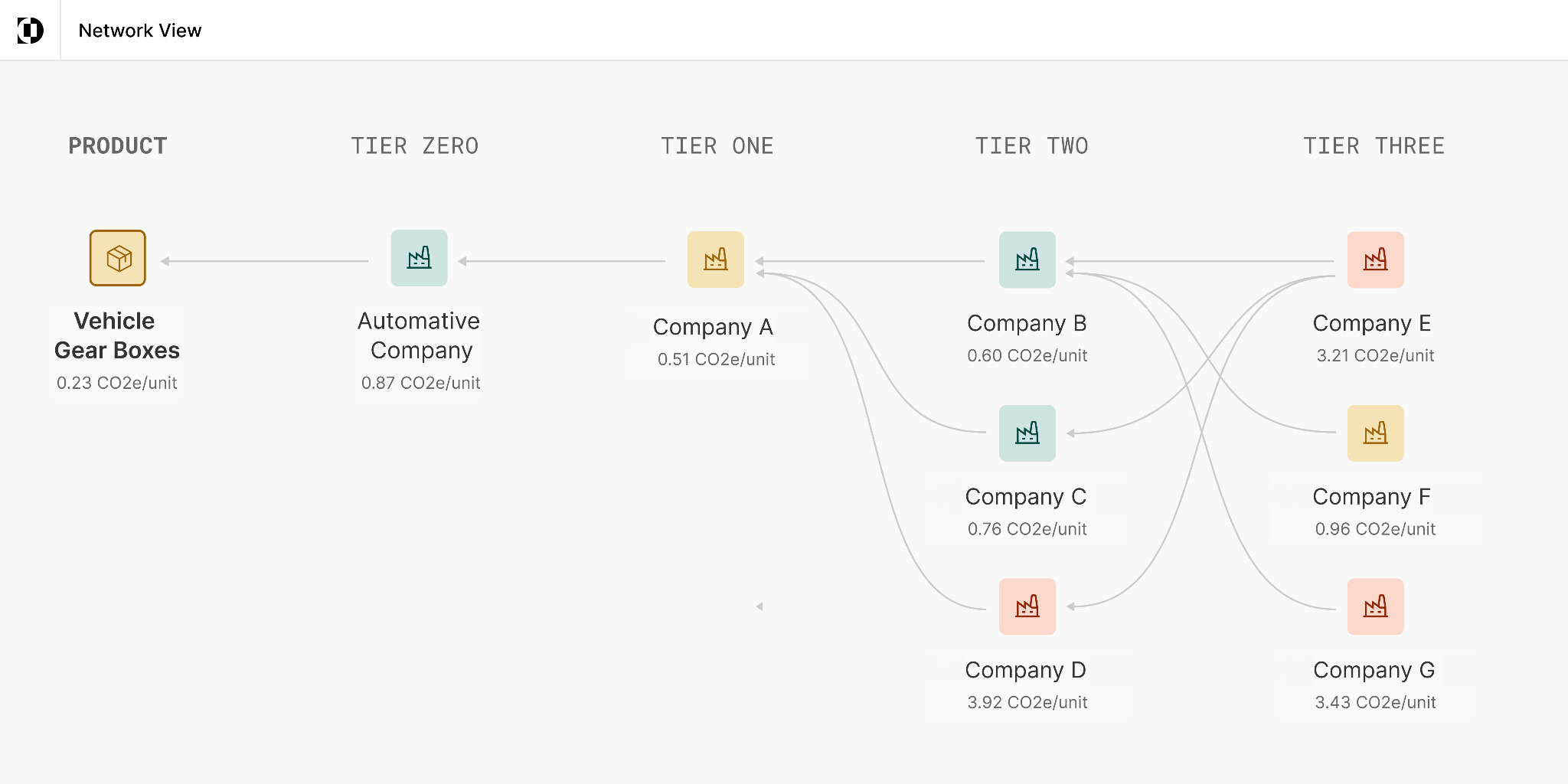
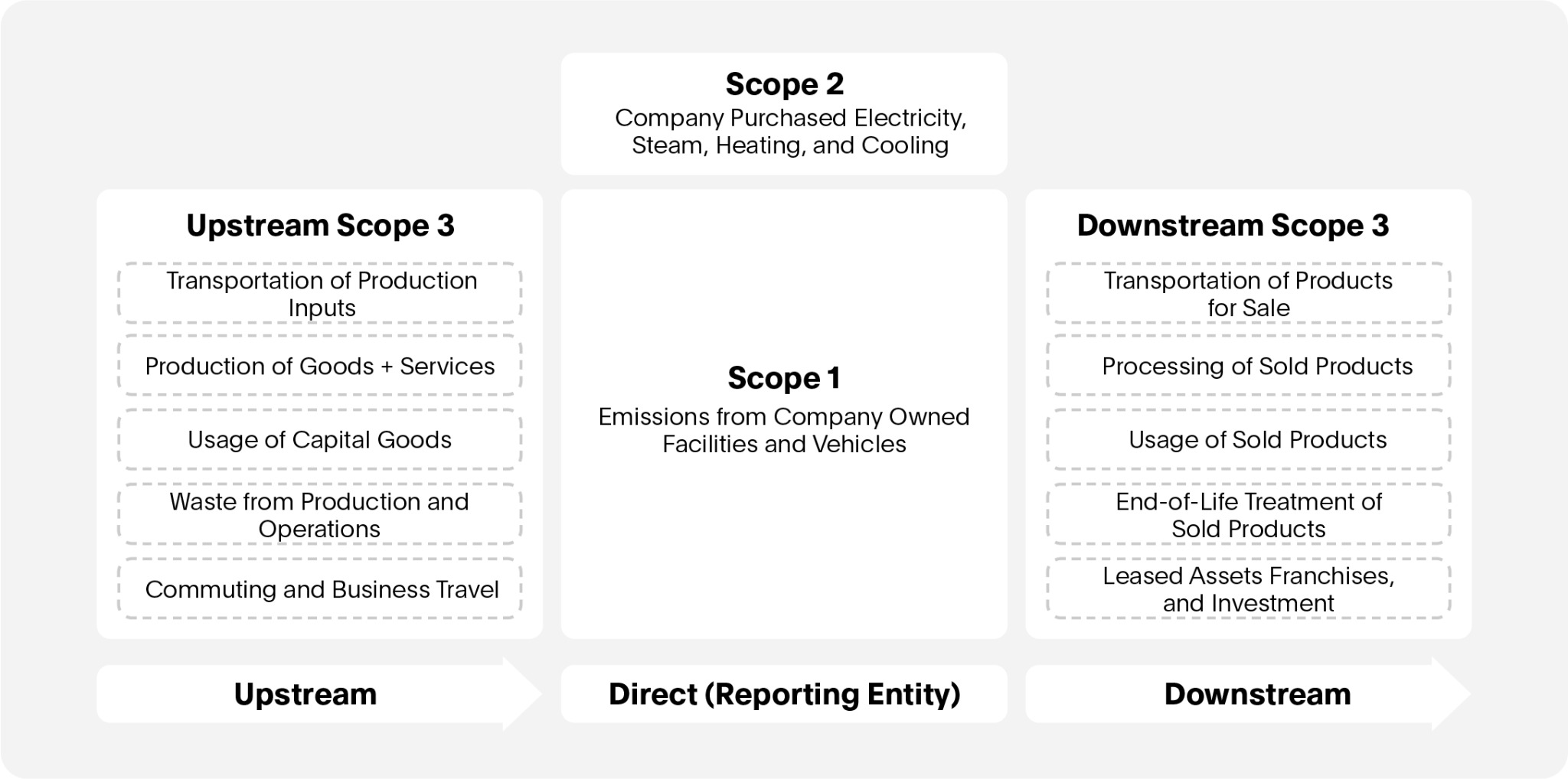
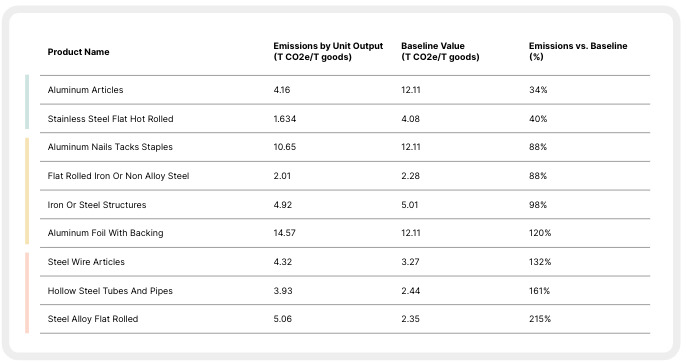
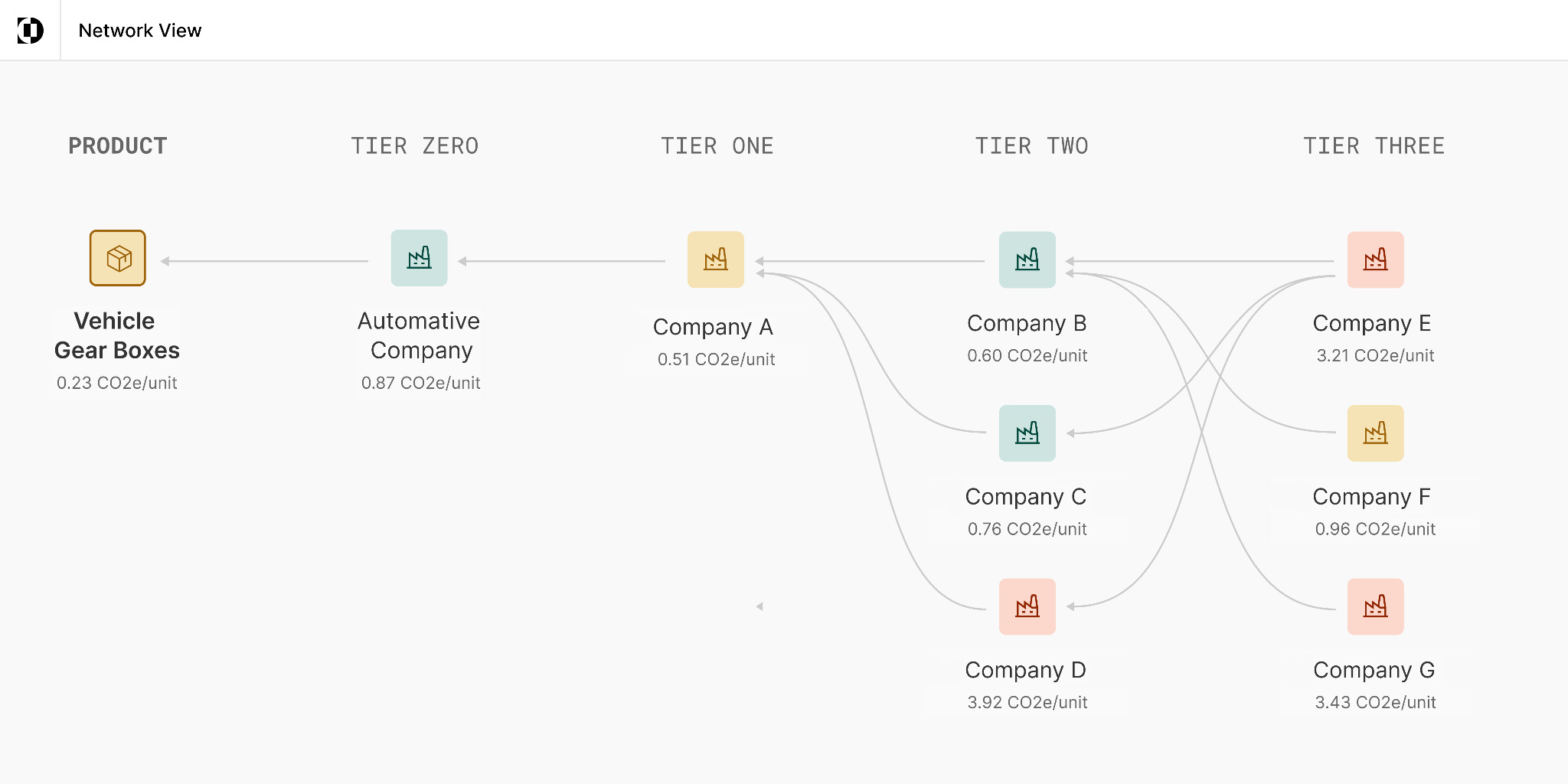
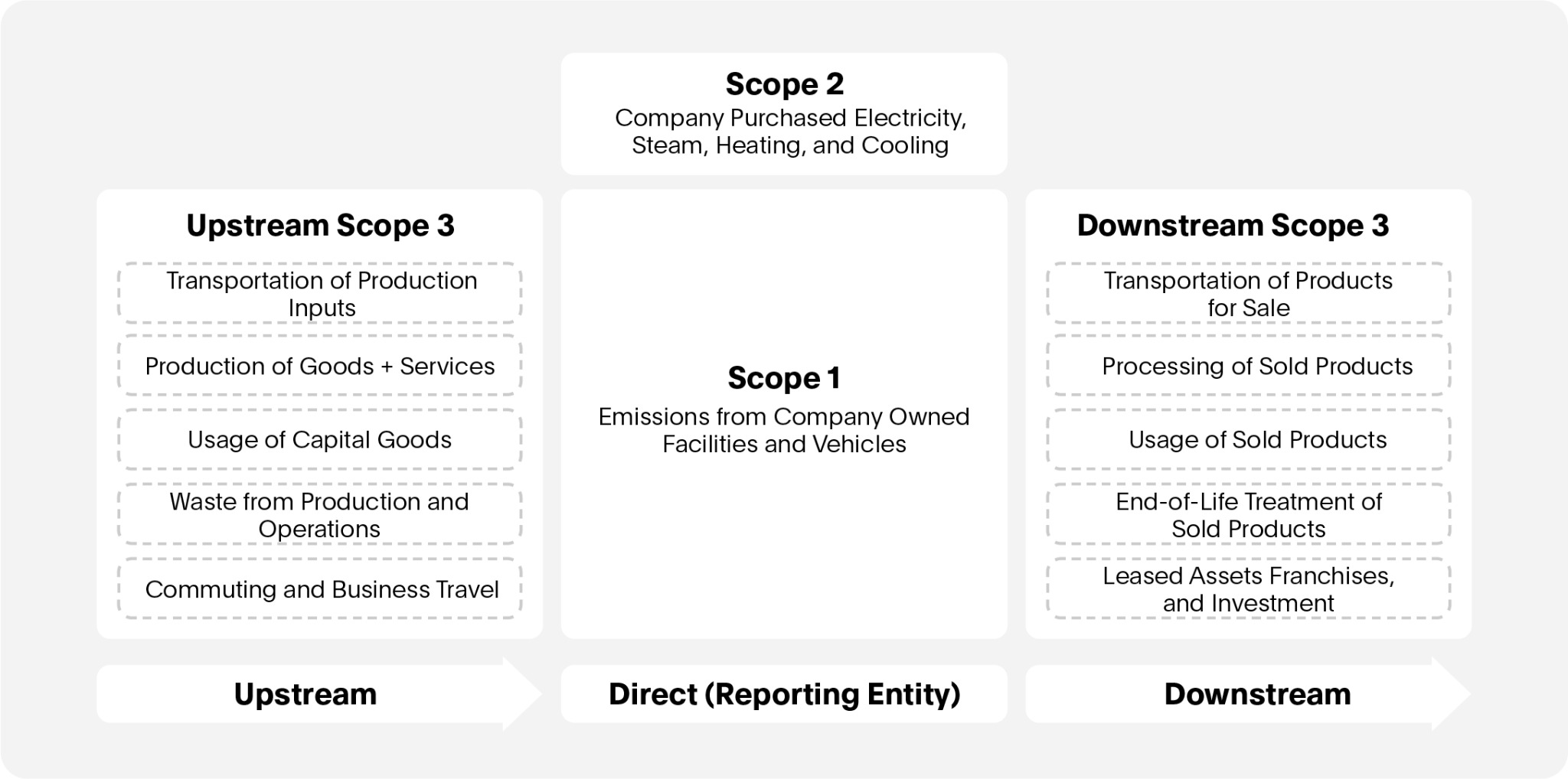
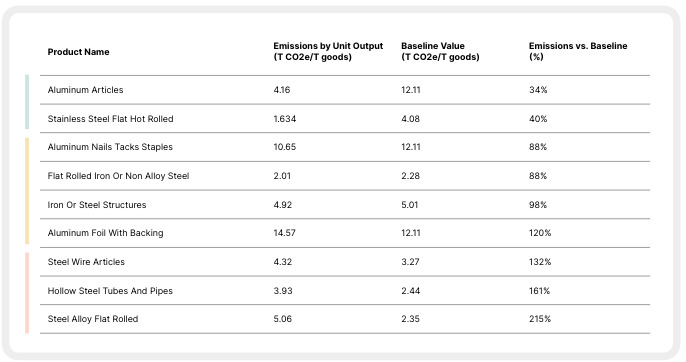
Figure 8 shows the authors’ usage of AI based on an underlying map of the product’s value chain to understand the carbon impact of production of an example good. The AI system applies, at scale, best-in-class Life Cycle Analysis (LCA) data with site-specific information on heavy industry emissions (e.g. iron-and-steel plant, aluminium plant, chemical plant) to achieve far more accurate estimates of the emissions involved across all steps in a given good’s value chain. Collaboration across the value chain is possible, enabling companies and regulators to get exact measurements from identified hot-spots where more precision is required. Such estimates include all emissions – Scope 1, Scope 2, and Scope 3 (Figure 9). Value Chain Management, implemented at the border, is thus the only way to do accurate global warming management at scale. Tariffs and taxes can then be assessed compared to baselines (Figure 10). LCA techniques applied in this manner can also produce estimates of deforestation, water usage/pollution and other similar impacts.
5.3.2. Human rights
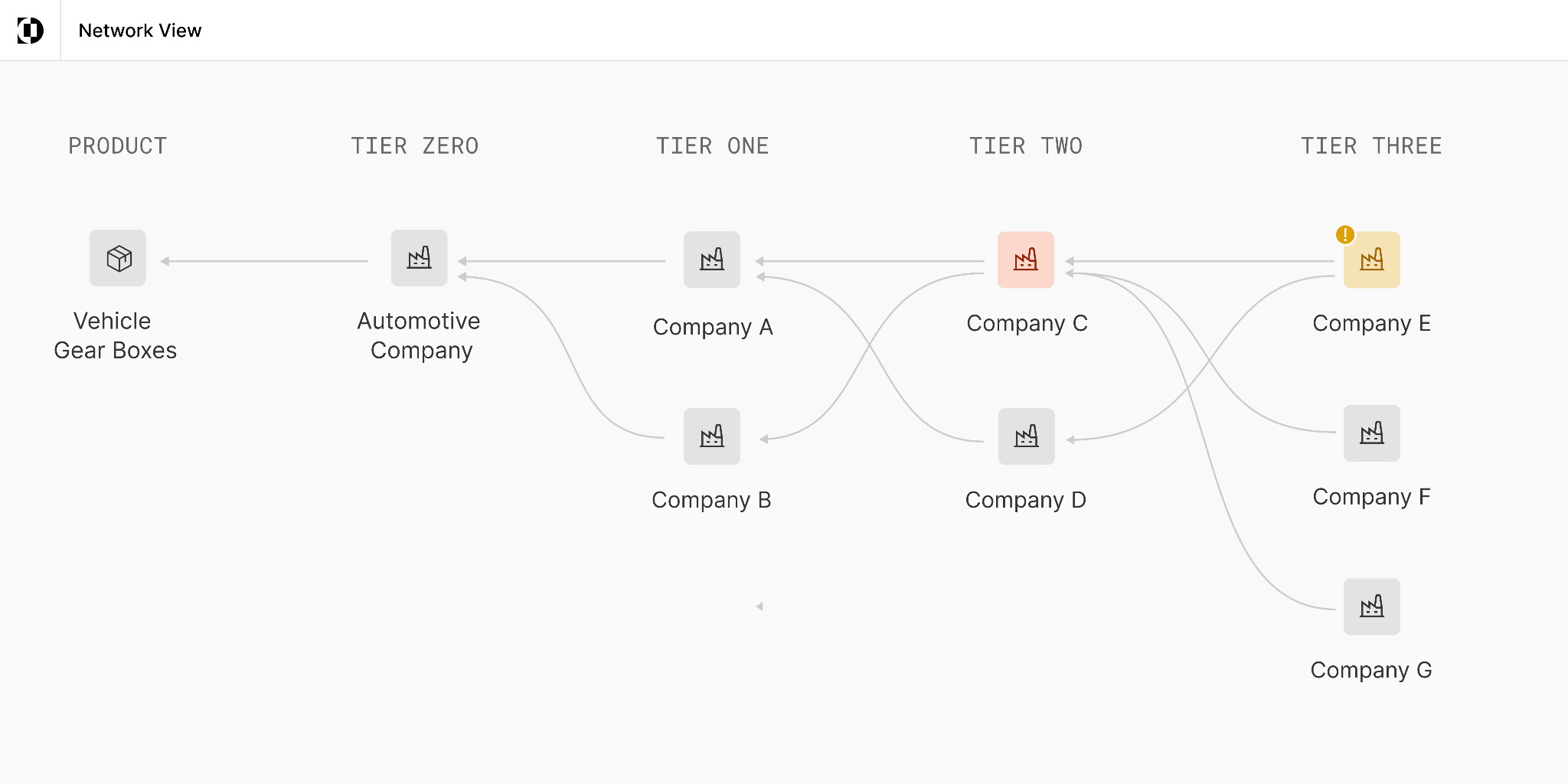
The same value chain visibility allows automated understanding of what shipments, companies and networks are involved in forced labour production. By understanding the extended multi-tier processes involved in a good’s production, connections to human rights abuses can be identified, with the relevant goods detained for further regulatory scrutiny. Public and private sector can then collaborate to identify if there is indeed exposure to such abuses, or if documentary evidence can be provided to show the good is not, at any level, produced in a non-compliant way.
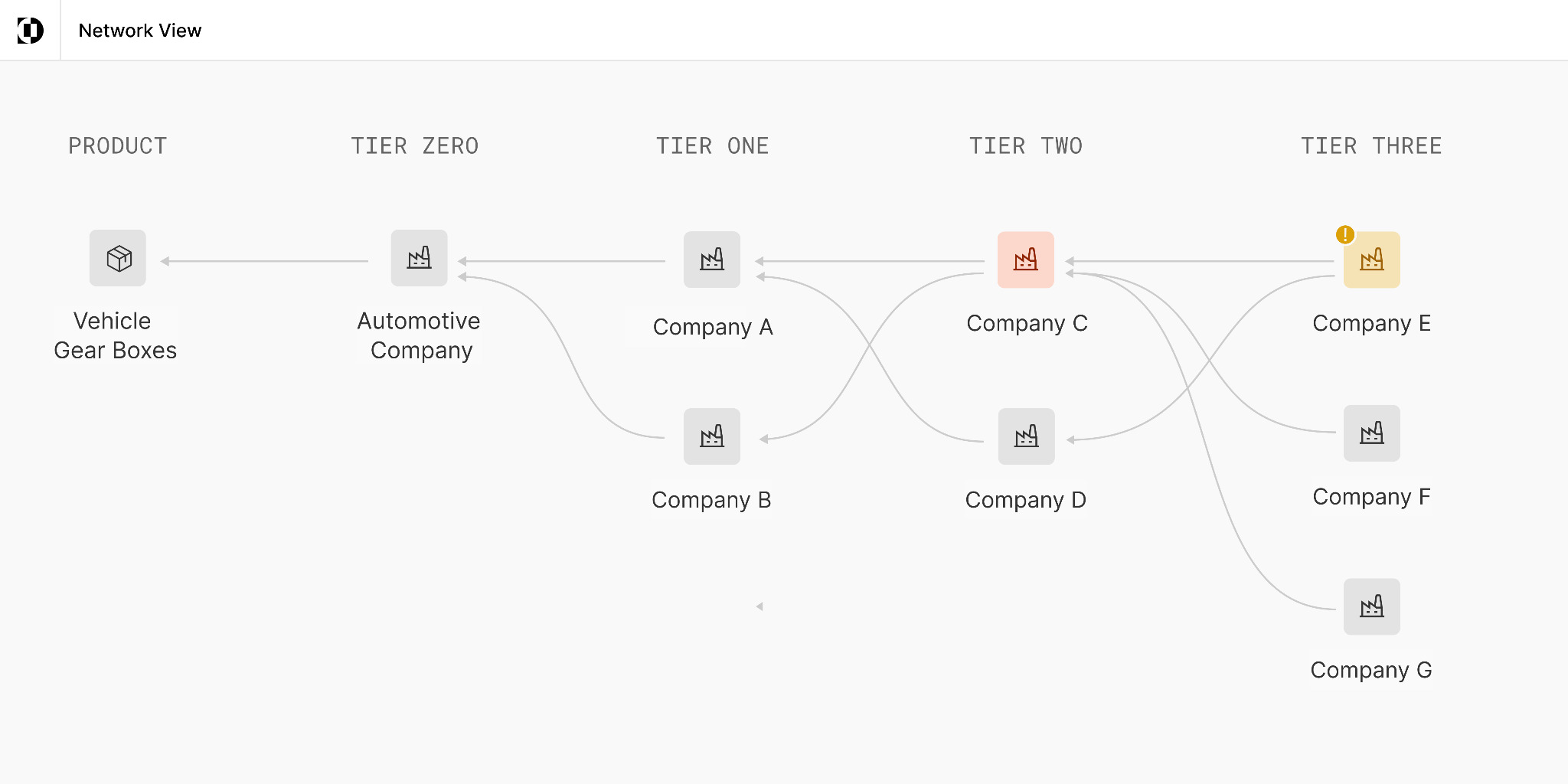
Figure 11 shows such a system, produced by the authors, that maps out the extended connections to human rights abuses. Such systems are actively in use to prevent goods made with human rights violations from crossing the border (Altana, 2023).
5.4. Economic security
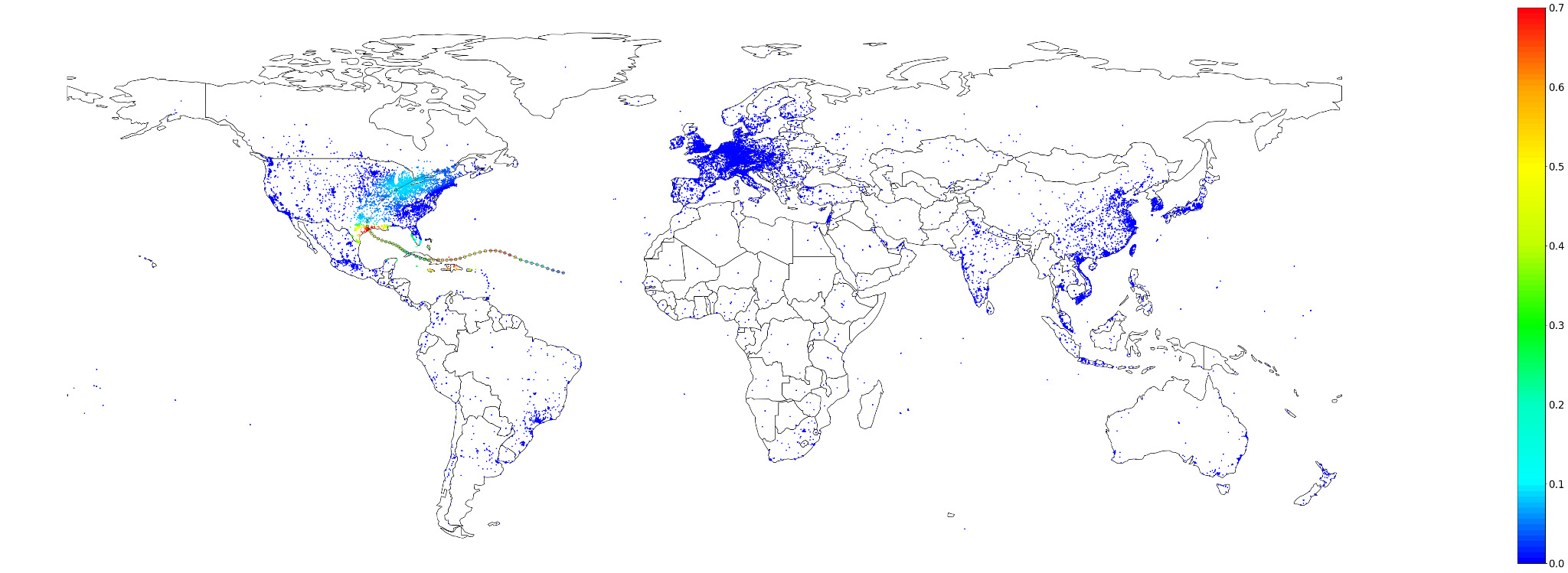
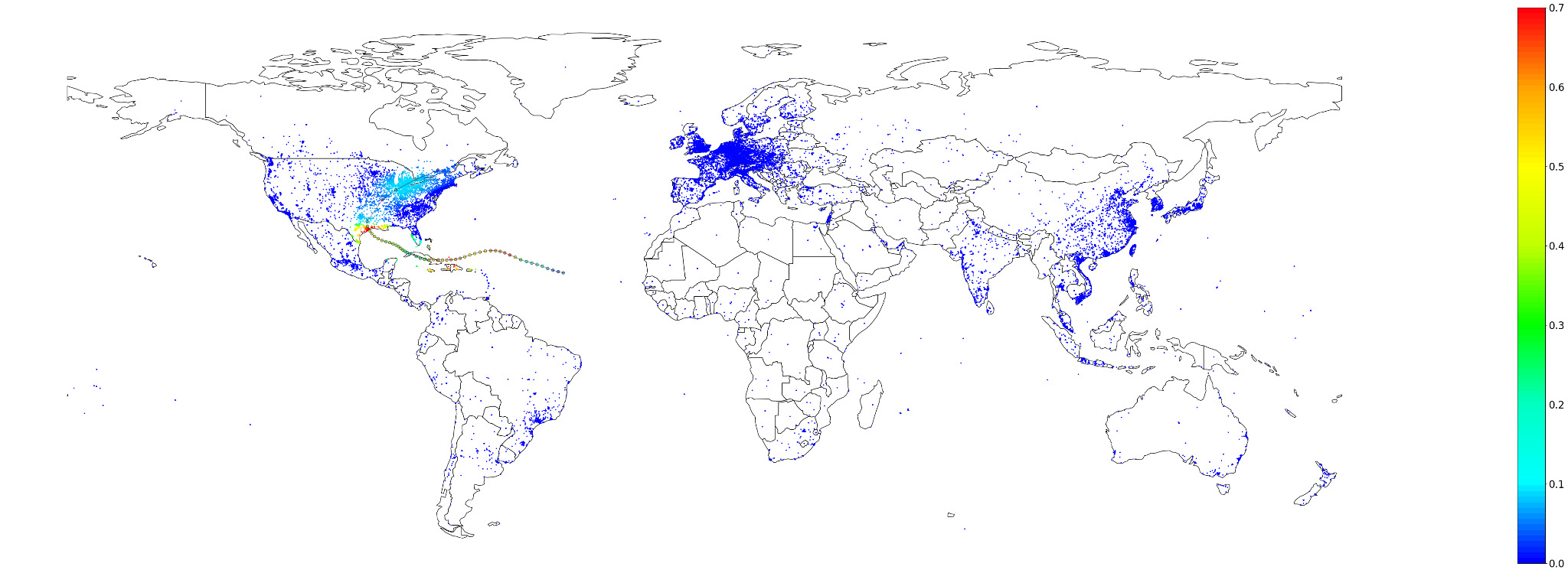
The same systems and VCM approaches can leverage the underlying information to understand multi-tier supply chains at national and global scale. Governments can thus understand and act to alleviate bottlenecks in critical goods – rare earths, defence goods, medical supplies, energy and foodstuffs. Figure 12 shows the multi-tier impact of a hurricane on extended production networks; such disruptions spread through multiple, often unexpected, tiers, as do war disruptions and export controls.
The underlying understanding of value chains that has been assembled to support all the previous capabilities described above allow an incredibly tightened OODA loop that enables resilient and quick reaction to potential or real disruptions. Mature systems combine AI and structured collaboration between the public and private sectors, drawing on existing relationships with border management agencies to construct and analyse deep-tier supply chains. This approach supports the matching of risk mitigation actions to value chains, enabling government analysis of and assistance in inventory management, supplier selection and management, and crisis management. Product passports, one expression of this collaboration, in their fullest form are thus a collaborative exercise where the government and private sector can respond to requests for information and fill in gaps.
Multi-tier visibility enables governments and industry to understand the true material impacts of events, prioritise disruptions, and coordinate responses. Modern border agencies will increasingly operate across government and with the private sector, serving as both a source of insight and an operational point of intervention (HM Government, 2024).
As another example, imagine that Figure 11 shows, rather than human rights abuse, a multi-tier exposure to potential or active critical raw material export controls. In such cases modern border management provides a key source of both proactive and reactive agency. By understanding exposure, alternative supplies can be found or funded – a previously critical and opaque dependency can now be addressed in a clear and logical manner.
6. Conclusion: towards strategic, federated border governance
Borders are once again central to strategic policymaking, as platforms for economic resilience, national security and industrial policy. The convergence of geopolitical fragmentation and modern AI capabilities creates an inflection point: AI systems are well suited to master the complexity that now overwhelms traditional border management. Nations face a choice between clinging to legacy inspection-and-declaration models inadequate to 21st-century threats, or investing in infrastructure that treats the border as the strategic asset it has become.
At the heart of this shift is not simply advanced detection, but a new operating model for border governance. Enabled by three reinforcing AI capabilities (expanded value-chain visibility, dynamic risk orchestration and coordinated cross-agency, cross-public-private, and, where desired, cross-government, action), border systems can compress the OODA loop, moving from episodic, transaction-based screening to continuous, network-level oversight. This represents a structural evolution in how border management functions, matching the speed and scale that modern trade, travel, and threat environments demand.
The AI-enabled systems demonstrated in Part 2 address each dimension of this expanded mandate through a common foundation: the ability to construct, decide, and act upon, in real time, an evidentiary map of the value chains underlying every cross-border movement.
As outlined in the paper, this shared infrastructure enables targeting of narcotics production networks at their source rather than at final distribution, trade facilitation that expedites 40 per cent of shipments through green lanes while focusing enforcement resources on genuine risks, revenue recovery measured in billions of dollars through AI-detected misclassification and misvaluation, environmental compliance that traces carbon and deforestation impacts through multiple tiers of production and human rights enforcement that identifies forced labour exposure deep within supply chains. Perhaps most critically for an era of fragmentation, the same visibility enables governments to understand and act upon the multi-tier dependencies that define national economic security – whether in semiconductors, pharmaceuticals, rare earths or defence industrial inputs.
What makes this approach viable in a multipolar world is the federated architecture that underlies it. Federated systems move algorithms to the data, enabling secure collaboration across jurisdictions while preserving sovereignty – transforming the traditional zero-sum framing, where visibility requires vulnerability, into a positive-sum framework where nations can deepen trade relationships while strengthening security.
Realising this potential demands institutional capacity to integrate AI-enabled systems into border management through cross-government and public-private collaboration. Nations that invest early will be better positioned to manage risk, facilitate lawful trade and ensure economic resilience. Those that delay will find themselves increasingly unable to meet the demands of modern trade policy. In an era of fragmentation, the border is no longer a line to be defended but a network to be orchestrated. The prize is continued global trade and economic growth without compromise of national security and resiliency.
Note: Michael Outram is a former Australian Border Force Commissioner and Comptroller-General of Customs, as well as a member of the software development company Altana’s Advisory Board. Peter Swartz is Co-Founder and Chief Science Officer of Altana.
Explainability refers to the system’s ability to show why it reached a particular conclusion – providing the evidence and reasoning behind its decisions, rather than operating as a ‘black box.’
Explainable AI refers to AI systems designed so that their outputs (decisions, predictions, recommendations) can be understood and reviewed by humans. Rather than simply producing a result without justification, the system shows the evidence and reasoning behind it, allowing users to verify, challenge or trust the conclusion. For example, an explainable AI system flagging a shipment can point to the specific data (e.g., trade records, company relationships, valuation discrepancies) that led to its assessment.
Product passports encompass both environmentally focused passports (e.g. the EU’s Ecodesign for Sustainable Products Regulation (ESPR), Regulation (EU) 2024/1781) and more general descriptions of products describing their production, usage and required documentation.
Based on the authors’ operational deployment; validated through backtesting on holdout sets and real-world inspection outcomes comparing green-lane and non-green-lane cohorts.
Reporting obligations under CBAM are fulfilled periodically to the national competent authorities via the CBAM registry, but are based around the trigger of importing specific goods and thus are intimately tied to Customs. Future CBAM certificate obligations will be determined by the embedded emissions associated with imported goods.