1. Introduction
International conventions and standards related to customs procedures are essential for effective risk management, as they establish a harmonised framework for trade operations. This standardised approach ensures consistency and predictability in cross-border transactions. By adopting these globally recognised standards, customs administrations can significantly enhance their operational efficiency, fostering a secure and streamlined environment for global trade. In Ukraine, customs regulations are aligned with internationally accepted protocols. These include the declaration of goods, methods of customs valuation, classification and coding of goods, customs procedures, and other widely recognised practices and standards. This legal framework is explicitly defined in the Customs Code of Ukraine (CCU) (Verkhovna Rada of Ukraine (VRU), 2012).
One of the most notable international standards is the Authorised Economic Operator (AEO) program. In the complex landscape of global supply chains and risk management, this program plays a crucial role. The World Customs Organization’s (WCO) AEO program embodies the core principles of risk management (Widdowson, 2020, p. 70) and is built upon a foundation of mutual trust between customs authorities and businesses. As Karlsson (2017, p. 24) notes, it is insufficient to base an international trade risk management system solely on the nature of products and procedures; the safety and reliability of the operators themselves constitute the most critical factors. When operators are deemed safe and low-risk, the associated risks linked to goods and procedures become less significant in the overall risk assessment.
The AEO concept was introduced through the International Convention on the Simplification and Harmonization of Customs Procedures (Revised Kyoto Convention; RKC) (WCO, 1999) and further elaborated in the SAFE Framework of Standards (SAFE FoS) (WCO, 2025). The second pillar of the SAFE FoS is dedicated to the management of AEO programs. Trade facilitation measures related to AEO programs are also addressed in the World Trade Organization (WTO) Agreement on Trade Facilitation (WTO, 2014) (Article 7.7). Ukraine has aligned its national legislation with these instruments and is actively working to fully implement their provisions, particularly those concerning the AEO program, at the domestic level.
Numerous scholars have contributed to the development of the AEO program (Gellert, 2011; Karavayev, Duginets, & Nikanorova, 2022; Karlsson, 2017; Nestoryshen & Berezhnyuk, 2016; Nestoryshen & Turzhanskyi, 2017; Ostrikova, 2021; Pham, 2021; Polner, 2012; Razumei, 2014; Widdowson, 2016, 2020; Wolffgang & Natzel, 2007). In Ukraine, a recent research initiative titled EU Authorized Economic Operator Program: Implementation in Ukraine is currently being conducted as part of the Erasmus+ Jean Monnet project funded by the European Union (EU) and hosted by the State University of Trade and Economics (Karavayev, Duginets, & Zolotarova, 2022). This project seeks to advance the development and dissemination of European studies related to procedures for obtaining AEO status, drawing on the EU’s practical experience. However, the academic literature continues to lack a comprehensive analysis of the challenges associated with AEO implementation in Ukraine.
This study contributes to the AEO literature by analysing the implementation of the trusted trader program in Ukraine under conditions of ongoing military aggression and wartime economic disruption. Unlike most existing studies focused on stable institutional and market environments, this article examines customs–business partnership models in the context of existential security threats to the state caused by the Russian Federation’s aggression against Ukraine since 2014, including the annexation of Crimea, the occupation of eastern regions of Ukraine, and the full-scale invasion launched on 24 February 2022. Based on this unique context, this article introduces the concept of a crisis-driven AEO to explain how trusted trader mechanisms function during existential state emergencies.
In 2014, Ukraine signed the Association Agreement between the European Union and the European Atomic Energy Community and their Member States, of the one part and Ukraine, of the other part (EU–Ukraine Association Agreement), which emphasises the need for the implementation of international standards, including the SAFE FoS (EU–Ukraine Association Agreement, 2014). Nonetheless, Ukrainian practice has revealed a lack of institutional readiness among policymakers and customs authorities to fully embrace the concept of trusted traders. The primary impetus for introducing the AEO program in Ukraine stems from international obligations outlined in the EU–Ukraine Association Agreement (Ostrikova, 2021, p. 83). The establishment of the AEO framework in Ukraine aligns with the regulatory provisions of the EU Customs Union (Regulation (EU) No 952/2013; Commission Delegated Regulation (EU) 2015/2446; Commission Implementing Regulation (EU) 2015/2447; European Commission (EC), 2016). This alignment is particularly significant given Ukraine’s status as a candidate country for EU accession (European Parliament, 2023), as post-accession Ukraine will be required to fully comply with the provisions of the Union Customs Code (UCC) (EC, 2013). When analysing the prospects for Ukraine’s accession to the EU, it is also important to note that the EU functions primarily as a customs union. The AEO program constitutes a key component of the EU Customs Union’s security framework (Laszuk & Ryciuk, 2016, p. 33). It enhances supply chain security while fostering compliant and transparent trade practices. Businesses that obtain AEO certification benefit from simplified customs procedures, including reduced inspections and priority processing. These advantages contribute to greater trade efficiency and more effective customs risk management (Jażdżewska-Gutta et al., 2020).
2. Methodology
To examine the institutionalisation of the AEO program under wartime conditions, this research employs a qualitative, descriptive design centred on a case study approach focusing on Ukraine. In doing so, the implementation experiences of other nations are also considered to provide a broader contextual perspective. Primary data collection involved a rigorous legal and institutional analysis of statutory frameworks, incorporating the CCU, EU Customs Union regulations, and official documents obtained via a formal written inquiry to the State Customs Service of Ukraine (SCSU). Empirical parameters were derived from the national registry of 100 AEOs to assess current program features. To facilitate sectoral categorisation, a cross-framework mapping was executed based on the correspondence between the Ukrainian Classification of Economic Activities (KVED-2010) (State Statistics Service of Ukraine, n.d.) and the International Standard Industrial Classification (ISIC Rev. 4) (United Nations (UN), 2008). The comparative assessment was conducted to benchmark Ukraine’s four-phase development trajectory against the historical implementation dynamics of EU member states. These qualitative and quantitative data streams were synthesised to construct the conceptual framework for a crisis-driven AEO model. Thus, the study explores how wartime conditions, EU integration obligations and cooperation between customs authorities and businesses affect the implementation of trusted trader mechanisms in Ukraine.
3. Phases of Authorised Economic Operator development in Ukraine
Since 2019, Ukraine has been actively implementing the AEO program, marking a pivotal milestone in the implementation process, which formally began in 2012. This process, characterised by its protracted and complex nature, has faced numerous challenges, resulting in several contradictions and inconsistencies within the regulatory framework. At present, the outlook for further development of the AEO program remains uncertain. Accordingly, the implementation process in Ukraine can be conceptually divided into four phases (Table 1).
3.1. Formal implementation phase
The formal introduction of the AEO concept in Ukraine dates back to 2012, when the revised CCU was adopted. Chapter 2 of the CCU, titled ‘Authorized Economic Operator’, sets out declarative requirements for enterprises seeking AEO status. It also includes provisions on special simplifications, grounds for revocation of AEO status, and other general provisions. Nevertheless, the standards outlined in Chapter 2 did not align with EU customs legislation and, in some cases, contradicted it. Moreover, no mechanisms for implementing the relevant CCU provisions were established, and no subordinate regulatory acts were adopted to give effect to them (Nestoryshen & Berezhnyuk, 2016). As a result, over the following seven years, no Ukrainian enterprise succeeded in obtaining AEO status due to both legal and procedural deficiencies.
3.2. Initial phase
The practical implementation of the AEO program commenced in 2019, following a high-level governmental decision. This shift was made possible with the support of the EU Public Finance Management Support Programme for Ukraine (EU4PFM), the British Embassy and the Reform Support Team. The Reform Support Team at the Ministry of Finance of Ukraine operates within the framework of the Ukraine Reforms Architecture program, which is supported by the European Bank for Reconstruction and Development (EBRD) Ukraine Stabilisation and Sustainable Growth Multi-Donor Account (Ministry of Finance of Ukraine, n.d.). Customs experts from these international initiatives provide expert advice and assist in drafting regulatory acts, incorporating European best practices in the implementation of the AEO framework.
Under Article 84 of the EU–Ukraine Association Agreement, Ukrainian customs legislation is to be gradually aligned with EU customs legislation, based on the principle of the best efforts (EU–Ukraine Association Agreement, 2014). As part of this harmonisation process, the implementation of the AEO program in Ukraine, analogous to that applied in the EU, has been identified as a critical stage. The VRU adopted amendments to the CCU, resulting in a comprehensive revision of the AEO chapter of the Code (VRU, 2019). Legal mechanisms for the implementation of the CCU provisions were established by the Government of Ukraine, and the necessary documents on AEO matters were approved (Cabinet of Ministers of Ukraine (CMU), 2022).
All necessary customs instructions were developed to enable the full implementation of the AEO program. Within the structure of the SCSU, a specialised unit dedicated to AEO matters was also established. A Unified State Register of AEOs was created on the official website of the SCSU, and the procedure for its maintenance was formally approved. Personnel training commenced at regional customs offices across Ukraine, and outreach efforts were conducted within the business community to raise awareness of the opportunities and competitive advantages associated with obtaining AEO status. As a result of these efforts, in 2021, the first enterprise in Ukraine was granted AEO status. This enterprise is a subsidiary of the Japanese corporation JT International, engaged in the production of tobacco products, JT International Ukraine (SCSU, 2025b).
3.3. Development phase
In August 2022, the EU Council endorsed the EC’s proposal and decided to invite Ukraine to accede to the Convention on a Common Transit Procedure (Common Transit Convention) (Convention on a Common Transit Procedure (EU), 1987) and the Convention on the Simplification of Formalities in Trade in Goods (Simplification of Formalities Convention) (Convention on the simplification of formalities in trade in goods (EU), 1987). Subsequently, the Ukrainian Parliament adopted a series of laws required for the international implementation of the New Computerised Transit System (NCTS). These laws came into effect on 1 October 2022.
Within the framework of this legislation, one of the laws standardised the rules for obtaining financial guarantor status, ensuring the payment of customs duties, and authorised the application of simplifications. These simplifications included the ‘comprehensive guarantee’, the ‘comprehensive guarantee with a 50 per cent reduced amount’, the ‘comprehensive guarantee with a 70 per cent reduced amount’ and the ‘guarantee waiver’, as defined by the Common Transit Convention (VRU, 2022a). These transit simplifications complemented the general system of simplifications established by the CCU. To implement the new provisions, a series of subordinate regulatory documents were also adopted at the level of the Government and the Ministry of Finance of Ukraine.
In international business, Ukrainian enterprises have gained the opportunity to leverage transit simplifications in line with practices adopted by companies in the 35 member countries of the Common Transit Convention. This has effectively enabled businesses to combine transit facilitations with specific or comprehensive exemptions, without the requirement to obtain AEO status. Consequently, exporters, importers, customs brokers and other supply chain participants can tailor an optimal set of simplifications, similar to those used by enterprises in the EU.
The AEO and NCTS programs share five identical types of simplifications, whereas each features two distinct simplifications. Specifically, the ‘simplified declaration procedure’ and ‘release at place’ are characteristic of the AEO program (VRU, 2012) (Article 13), while transit simplifications such as ‘authorised consignor status’ and ‘authorised consignee status’ are available to businesses within the NCTS framework (CMU, 2022). That is, the opportunities for a reduced comprehensive guarantee or waiver, as well as the use of seals of a special type, remain analogous for both programs. All simplifications under the AEO program are thus granted to economic operators as a comprehensive package, requiring them to satisfy all legally defined criteria simultaneously. Conversely, each transit simplification under the NCTS can be obtained individually, which generally implies compliance with less stringent criteria requirements, unless an operator seeks to acquire all simplifications at once. Evidently, the NCTS approach offers greater flexibility, allowing enterprises to obtain the specific simplifications that align with their distinct foreign economic activity model, rather than following a standardised template. It should also be noted that for enterprises with AEO status, certain advantages (VRU, 2012) (Article 13, part 3, 4) automatically become accessible in addition to the previously discussed simplifications (VRU, 2012) (Article 13, part 1). These advantages are not available to economic operators that have obtained transit simplifications under the NCTS program.
Conceptually, the development phase concluded with the formal removal of the option for traders to complete customs clearance of goods during import and export without physically delivering the cargo to the customs clearance locations. This applies unless the customs risk analysis system has identified the need for a customs inspection. This provision was enshrined in the CCU (VRU, 2012) (Article 259, part 4), which allowed, by decision of the customs authority accepting an advance customs declaration, the release of goods and means of transport for commercial use without presenting them to the revenue and duties authority.
3.4. Scaling phase
From 7 November 2023, the option to forgo submitting goods to customs remains available only to enterprises participating in the European AEO or NCTS programs. As a result, certain enterprises have made efforts to attain AEO status and continue operating according to the established model of foreign economic activity and the new realities of customs legislation.
In 2025, 87 comprehensive guarantees amounting to nearly EUR300 million were registered in the electronic transit system for common transit purposes. By comparison, 109 comprehensive guarantees valued at over EUR198 million were registered in 2024. Thus, despite the decrease in the number of guarantees, the capacity to secure transit movements using comprehensive guarantees increased by 51 per cent. Furthermore, during 2025, three holders of the common transit procedure obtained the transit simplification of a ‘guarantee waiver’, amounting to nearly EUR27 million. A total of 11 such operators were registered in the electronic transit system, with the aggregate amount of guarantee waivers exceeding EUR57 million (SCSU, 2026a). During the first quarter of 2026, the number of authorisations granted for the application of simplifications outside the AEO program, including transit simplifications under the NCTS framework, exceeded 1,435 (SCSU, 2026b).
As a result, a new approach to conducting foreign economic activities and managing relations between enterprises and customs authorities has emerged. It was anticipated that the repeal of national simplifications for customs clearance would serve as a scaling factor for the AEO program in Ukraine, as also substantiated by the findings of the EC report (EC, 2023).
These expectations were partially justified, but it is unlikely that the outcomes of AEO implementation in Ukraine can be considered fully satisfactory. To draw objective conclusions, a deeper consideration of the current features of the AEO program at the national level is required.
4. Current features of the Ukrainian Authorised Economic Operator program
Overall, Ukrainian legislation on the AEO program has been developed in line with EU legislation. Nevertheless, as of 31 August 2025, only 100 enterprises in Ukraine have obtained AEO status, representing a small proportion of the tens of thousands of enterprises engaged in Ukraine’s foreign trade activities who potentially qualify for such status (SCSU, 2025c). The total number of companies with AEO status in the EU exceeds 17,000 (EC, 2025). By comparison, approximately 80 per cent of export-import operations are conducted by companies holding AEO status.
A potential challenge for Ukrainian businesses is the lack of transparency regarding customs and tax authorities (Karavayev, Duginets, & Nikanorova, 2022). While Ukraine maintains an open AEO register containing information on authorisations already granted, data on the main quantitative and qualitative indicators of the AEO authorisation process are not publicly accessible to businesses or other stakeholders. In response to an official written request to the SCSU, the agency stated that it could not provide information on the number of applications submitted by businesses, the number of decisions made, or the reasons for refusals to grant AEO authorisation. This pertains to the period 2020–2025 (SCSU, 2025d). The lack of transparency indicates significant gaps in communication between the customs administration and stakeholders, thereby undermining public trust in state authorities.
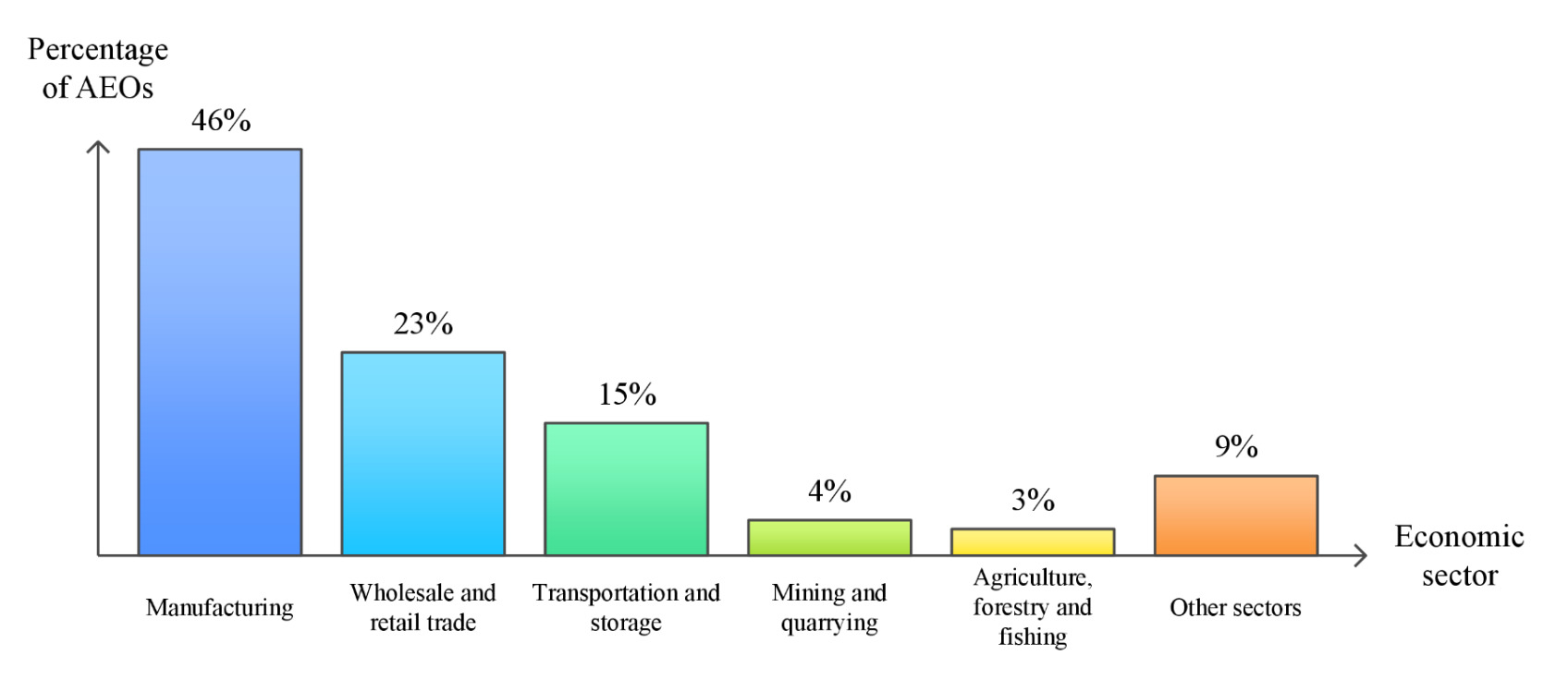
Any enterprise resident in Ukraine that participates in the international supply chain of goods, including manufacturer, exporter, importer, customs representative, carrier, forwarder or warehouse keeper and has obtained authorisation under the CCU, may apply for AEO status. AEO authorisation can be of the ‘customs simplifications’ type (AEO-C) or the ‘security and safety’ type (AEO-S). The enterprise independently chooses the type of authorisation and may hold both types of authorisation simultaneously. To obtain the chosen type of authorisation, the enterprise submits an application for AEO authorisation together with a self-assessment questionnaire to the SCSU. An analysis of 100 enterprises that have already received AEO authorisation indicates that most of these enterprises are classified as large according to international criteria. Consequently, micro-, small- and medium-sized Enterprises (MSMEs) face limited access to the AEO program in Ukraine. This situation contradicts the latest updates to the SAFE FoS, which emphasise inclusive participation in the AEO program and the adaptation of standards to the specific needs of MSMEs. The WCO highlights the pivotal role that MSMEs play in global trade and notes that the SAFE FoS has been designed to be accessible and supportive to these key stakeholders. By adapting its standards to the specific needs of MSMEs, the WCO aims to foster an environment in which innovation and compliance reinforce each other, thereby promoting sustainable economic growth (WCO, 2025, p. 4). Figure 1 presents the distribution of the 100 AEOs in Ukraine across different economic sectors.

The classification of AEO companies by economic sector was based on the correspondence between the KVED-2010 and the ISIC Rev. 4 framework. This approach ensured alignment with the international standards applied by Eurostat and the Organisation for Economic Co-operation and Development.
The analysis of 100 Ukrainian companies that obtained AEO status shows that almost half (46%) operate in the manufacturing sector, reflecting the predominance of industrial exporters and producers in the program. Wholesale and retail trade accounts for 23 per cent, indicating that many AEOs act as intermediaries in international supply chains. The transportation and logistics sector represents about 15 per cent, confirming the important role of logistics operators in implementing the AEO concept. Only a few AEOs belong to agriculture (3%) and extractive industries (4%), while the representation of service sectors remains negligible.
Experience from EU countries shows that a significant proportion of companies granted AEO-S authorisation are carriers and freight forwarders (Jażdżewska-Gutta et al., 2020; WCO, 2020). The AEO program appears beneficial for all companies engaged in exporting and importing goods (Polner, 2012; Wolffgang & Natzel, 2007). However, this represents a generalised view across EU countries, which have diverse economies. Similar to the experience in Austria (Schramm, 2015), Ukrainian enterprises currently perceive greater advantages in export activities. Exporters in Ukraine, particularly food producers, demonstrate stronger interest in obtaining AEO-C status (Kormotech, n.d.). This may be attributed to the particular value of customs simplifications for goods that are highly sensitive to delivery times and the continuity of logistics supply chains (European Business Association, 2025).
Ukrainian enterprises are entitled to utilise several customs simplifications: comprehensive guarantees, including those with a 50 per cent or 70 per cent reduction of the basic amount; guarantee waivers; the use of special seals; simplified declaration procedures; and authorised release at place.
The indicated simplifications provide distinct advantages for enterprises, particularly as access to these measures is available outside the formal AEO program. Notably, businesses can select specific simplifications tailored to their operational needs and apply them without holding AEO status. An enterprise’s business model may require only one or a few targeted simplifications rather than the comprehensive suite granted under AEO certification. Consequently, to obtain authorisation for individual simplifications, an enterprise is not required to comply with the full set of AEO criteria. As a result, the authorisation process is generally less demanding than that required for full AEO status. This availability of stand-alone, flexible simplifications significantly disincentivises companies from applying for AEO status, as they can achieve their primary logistical objectives without undergoing the more rigorous and resource-intensive AEO authorisation process.
Ukrainian businesses, despite the ongoing military aggression of the Russian Federation against Ukraine, demonstrate relatively strong dynamics in obtaining AEO status. The dynamics of AEO authorisations in the first four years of the program’s implementation in the EU (2008–2011) indicate that more than half of EU member states (17 countries) exhibited similar (Denmark, Ireland, Slovenia, Czech Republic) or lower (including Finland, Romania, Slovakia, Bulgaria, Greece) growth rates in AEO authorisations compared to Ukraine. Furthermore, eight countries, including the United Kingdom, Austria, Belgium and Sweden, showed higher growth rates in AEO authorisations. Only three out of the 27 EU member states at that time (France, Germany and the Netherlands) demonstrated significantly higher AEO authorisation rates than Ukraine (SCSU, 2025a).
The most significant progress in AEO authorisations in Ukraine occurred in the fourth year following its practical commencement, specifically in 2024. This surge followed the abolition of legacy national simplifications in November 2023. Unlike the individually authorised simplifications discussed above, these legacy national simplifications did not require enterprises to undergo any authorisation or compliance evaluation. Allowing companies to utilise trade simplifications analogous to the AEO program without undergoing formal compliance evaluations was an anomaly that had no precedent in any EU member state. Consequently, Ukraine effectively eliminated unjustified opportunities for enterprises to access these customs facilitations without demonstrating compliance with core criteria.
It is important to note that the EU’s experience in implementing the AEO program and the dynamics of AEO authorisation growth did not consider the successful experience of other countries, as such experience was largely non-existent. From this perspective, the pace of AEO program implementation in Ukraine cannot be regarded as satisfactory if judged solely by the EU’s dynamics from 2008 to 2011. Ukraine has the potential to further strengthen business–government partnerships within the AEO framework, even under martial law. Moreover, the ongoing conflict could act as a driving force, motivating businesses to meet AEO compliance criteria and obtain AEO status. However, achieving this goal requires appropriate economic policies and the establishment of a state-led incentive system.
This shift in strategy could underpin the transition of the national program towards a crisis-driven AEO model, where traditional regulatory frameworks are adapted or accelerated to sustain economic survival amid severe operational disruptions. In the Ukrainian context, this model could address the critical vulnerabilities caused by the suspension of airspace operations and the severe destruction of traditional logistical corridors. To maintain its vital export potential and support an economy under continuous attack, Ukraine would require customs mechanisms that balance intensified security enforcement, aimed at preventing smuggling, sabotage and wartime diversion, with unprecedented trade facilitation. The crisis-driven AEO model could resolve this tension by leveraging institutional trust. This institutional trust could be operationalised through advanced digitalisation, comprehensive pre-arrival risk analysis and reinforced post-clearance audits. Therefore, customs authorities could maintain rigorous security oversight and counter wartime threats without relying on systemic physical inspections at the border. By granting compliant enterprises the privilege to clear goods without presenting them directly at physical customs control zones, the program could minimise the concentration of vehicles and freight. In an environment facing ongoing missile and drone strikes on transport infrastructure, this decentralisation of customs procedures could effectively mitigate the risk of catastrophic cargo loss, optimising supply chain security and routing efficiency when they are needed most.
4.1. Authorisation criteria for Authorised Economic Operator status
Each of the two types of operators (AEO-C and AEO-S) must comply with five specific AEO criteria. These criteria are subject to documentary verification by the enterprise. The assessment of compliance with these criteria is carried out in a prescribed manner by customs officials who undergo specialised training (Table 2).
The most contentious criterion proved to be the ‘Sustainable financial condition’. The methodology for calculating financial indicators at the initial stage of the AEO program’s development was such that even subsidiaries of large international corporations did not meet this criterion. Therefore, the compliance conditions for this criterion were relaxed during the period of martial law in Ukraine and for one year after its cessation or cancellation. In particular, additional values and a scoring system for solvency and liquidity indicators of the enterprise were introduced (CMU, 2023).
Coefficients and their respective limits for assessing an enterprise’s solvency and financial standing have been established. An enterprise must also demonstrate, using documents and information from the three years preceding the submission of the authorisation application, that it has sufficient financial stability to fulfil its obligations, taking into account the nature and scope of its business activities. This includes the absence of negative net assets, except where they can be covered. In compliance with the customs and tax legislation of Ukraine, an enterprise can ensure adherence to other criteria by aligning its processes and internal documentation accordingly. Initial applicants for AEO status faced bureaucratic challenges in documenting their compliance, as relevant experience was lacking both at the state and business levels. While consulting services for obtaining AEO status are available, the underdevelopment of this field has resulted in a certain monopoly in Ukraine, with the majority of services provided by the ‘Big Four’ firms, making them costly for small supply chain participants.
Experience indicates that preparing an enterprise for assessment against AEO criteria, including establishing internal processes and aligning all documentation, can take up to one year, depending on the enterprise’s profile, operations, size, workforce and other relevant business factors. The customs assessment of a company’s compliance with AEO criteria typically takes between one and four months, accounting for the time required to address any potential nonconformities in accordance with the ‘right to be heard’ principle.
The CCU also includes provisions on the grounds for refusal, suspension or renewal, modification, cancellation and annulment of AEO authorisation. Withdrawal, revocation or suspension of AEO status may entail significant legal and practical consequences (Gellert, 2011).
4.2. Advantages of Authorised Economic Operator status
Depending on the type of authorisation granted, the enterprise may benefit from specific advantages outlined in Ukrainian national legislation. These advantages create a more competitive business environment for companies with AEO status, as they facilitate faster customs clearance, reduce operating costs and foster stronger partnership and cooperation with customs authorities in general (Table 3).
Among the key advantages of the AEO program, the most critical benefit for enterprises is the ability to reduce the level of risk during customs clearance, thereby decreasing the number of physical inspections. There is a lack of clarity within the business community regarding the extent of this risk reduction, as national legislation lacks specificity. The most significant aspect is that the reduction in customs control volumes is only applicable when the automated part of the risk management system is used. Ukrainian customs authorities have sufficient grounds to apply control measures to enterprises during customs clearance based on other components of the manual risk management system. This essentially diminishes the value of the mentioned advantage for potential AEO status applicants.
Specially designated lanes at customs checkpoints have not been established in Ukraine, except for two pilot projects, due to their current impracticality given the comparatively low number of AEO-certified enterprises. However, the Government of Ukraine has approved a resolution introducing a new pilot project, e-Queue. The e-Queue initiative addresses the issue of priority queue formation and incorporates the presence of AEO authorisations at enterprises when goods are being moved out of Ukraine. These changes will enable businesses to fully benefit from priority customs processing at the checkpoint, thereby reducing border delays and enhancing the efficiency of logistics processes, as well as lowering associated costs.
The use of the national AEO logo primarily serves an image-building function and is, therefore, considered one of the least significant advantages for businesses. Typically, the presence of the logo on official documents during correspondence enhances the level of trust foreign counterparts place in a company with AEO status. Evidence from the EU experience indicates that the strategic value of this marketing tool depends heavily on the specific profile of the enterprise. For logistics service providers, including carriers, freight forwarders and customs representatives, marketing with the AEO logo serves as a primary operational driver when combined with the reduction of the comprehensive financial guarantee (Jażdżewska-Gutta et al., 2020). For these intermediaries, these two tangible advantages represent the core practical incentives for joining the program. Conversely, most other widely publicised benefits, such as reduced physical and documentary inspections, are often perceived as largely symbolic, given that empirical data confirming an actual decrease in customs controls for authorised operators remain virtually non-existent.
In addition, the operational reality of the AEO framework in the EU reveals a notable regulatory paradox. While AEOs are promised trade facilitation, their accounting and internal control systems are often subject to even more stringent and frequent monitoring by customs authorities than those of non-authorised traders. This continuous scrutiny is driven by strict mandatory compliance re-assessment requirements, effectively intensifying the domestic administrative oversight of certified companies (European Court of Auditors, 2023).
5. Mutual recognition
A primary objective in implementing the SAFE FoS is to secure mutual recognition of AEOs certified by different customs administrations. These agreements stipulate that enterprises meeting the SAFE FoS criteria and holding AEO status in their respective countries may benefit from concrete trade facilitation measures and engage in international trade on equal terms across all signatory countries.
The primary goal of businesses and governments is to maintain the highest level of security throughout the supply chain. Achieving this goal requires most states to implement robust security measures and pursue mutual recognition of their respective programs and concepts.
The Ukrainian AEO framework is analogous to that in operation within the EU. This alignment is justified by the prospect of future mutual recognition of AEO status, as stipulated in Article 80 of the EU–Ukraine Association Agreement (2014). It represents one of the key foundations for customs cooperation between Ukraine and the EU. The future recognition of Ukrainian AEOs by the customs authorities of EU member states will enable their participation in secure international supply chains and enhance their competitiveness in both domestic and foreign markets. Although each contracting party applies SAFE FoS principles within its jurisdiction, no binding mechanism currently ensures their mandatory international implementation. Specifically, the introduction of an AEO accreditation program by a state does not automatically confer mutual recognition of AEO status. While mutual recognition agreements (MRAs) specify the benefits extended to foreign AEOs, these benefits may be more limited than those available to domestic traders. Participants in national AEO programs may still be required to undergo separate accreditation procedures in each country where they conduct business. Establishing MRAs with key trading partners remains a primary objective for countries implementing an AEO program. Such agreements are essential not only for securing the global supply chain and reducing administrative burdens, but also for ensuring full alignment with SAFE FoS provisions.
In the absence of a global system for mutual recognition of AEO status, trading partners from different countries may face a competitive disadvantage. This challenge is particularly acute amid rising protectionist pressures, intensified by the slowdown in global economic growth. Progress in resolving mutual recognition issues and concluding MRAs remains relatively slow. In this regard, the MRA Development Model proposed by Pham (2021) merits attention. The model identifies various tools and factors influencing the MRA development process, outlining their impact across three key phases: preparation, negotiation and implementation. Without doubt, the EU and its member states are strategic priorities for Ukraine in concluding MRAs. Although each country may design an AEO program with national characteristics, the 27 EU member states have adopted a unified scheme, achieved through internal consensus on the interpretation and application of SAFE FoS, resulting in a single EU-wide AEO program – albeit with some national-level variations in implementation (Widdowson, 2016, p. 12).
However, negotiating such agreements remains a prospective avenue for Ukraine, with the terms and conditions for their implementation still uncertain. Notably, only AEOs of the AEO-S type, which confirm security and reliability, can benefit from mutual recognition, as MRAs cover only the security-related components of the AEO program. In Ukraine, seven companies have been granted AEO-S status, marking a significant step towards engaging in MRAs with other countries that have implemented AEO programs. It is generally considered that at least 10 companies must obtain AEO-S status in Ukraine before negotiations with the EU on an MRA can commence. Rather than constituting a legally binding statutory requirement, this threshold functions as a procedural benchmark established through arrangements with the EU a norm of direct effect (SCSU, 2026c). Reaching this benchmark will enable a more thorough assessment of the practical application of AEO-related legislative provisions during MRA negotiations. The conclusion of the first agreement may mark the beginning of a new phase in the development of Ukraine’s AEO program.
The EC’s 2024 enlargement package report for Ukraine noted that Ukraine had made progress in facilitating the use of authorised simplifications: 54 economic operators were granted AEO authorisations, but only two obtained AEO-S status (as of 30 October 2024) (EC, 2024, p. 80). This limited uptake constrains Ukraine’s progress in negotiating mutual recognition of AEOs with the EU (EC, 2024, p. 80).
The development and implementation of the AEO program in Ukraine remains crucial for the country’s integration into the global trading system and alignment with EU standards. Overall, amid rising competition in international trade, the benefits of AEO status and the prospect of concluding an MRA with the EU appeal to Ukrainian businesses, as they can improve logistics efficiency. Thus, accelerating the adoption of AEO-S status and negotiating MRAs will be pivotal for securing Ukraine’s competitive position and enhancing trade facilitation in international markets.
6. Reasons for the lack of progress in scaling up the Authorised Economic Operator program
The implementation of the AEO program in Ukraine was virtually ineffective between 2012 and 2019, primarily due to political factors. Since 2020, the necessary national legislation has been developed, the AEO program is functioning, and positive dynamics in this regard have been sustained. Hundreds of Ukrainian economic operators have received individual customs simplifications similar to those provided under the AEO program. Nevertheless, given the existence of tens of thousands of participants in Ukraine’s international supply chain, this number remains insufficient to ensure an adequate level of security, and to facilitate trade. Furthermore, the prospect of Ukraine’s accession to the EU demands more substantial progress in scaling up the AEO program, as consistently emphasised in the EC’s evaluation reports. Based on the case presented, the main groups of reasons behind the low level of enterprise participation in Ukraine’s AEO program can be identified.
Ukraine’s experience is globally unique, as it demonstrates the resilience and viability of developing such a framework amid Russia’s full-scale military aggression. While conditional parallels can be drawn with Israel regarding persistent security threats, Ukraine’s context is distinguished by the large-scale occupation of its territories and acute logistics disruptions. Specifically, the analysis of the Israeli framework demonstrates how persistent geopolitical risks force the customs administration to prioritise rigorous multi-layered security audits over standard trade facilitation benefits (Israel Tax Authority, 2022). Therefore, studying international best practices and drawing structural parallels is vital not only for Ukraine but also for other nations globally, as optimising domestic AEO frameworks becomes essential amid the escalating threats of military conflicts and widespread instability.
6.1. Pragmatic reasons
Bringing an enterprise into compliance with AEO criteria is costly, requiring substantial financial and human resources. In Ukraine, business practices typically do not include developing the internal instructions, policies and systems now required under national customs legislation for authorisation. The cost of hiring third-party consulting firms remains high, particularly due to the monopolisation of this market. Furthermore, without MRAs or clear prospects for their conclusion, enterprises perceive limited competitive advantages in foreign markets. Many Ukrainian enterprises may also struggle to compete with EU-based companies in the event of rapid market convergence.
Therefore, it is essential to account for the transitional experiences of neighbouring post-socialist EU member states, such as Poland and Romania, which confronted analogous structural barriers during their integration phases. Historical evaluations and audits indicate that early AEO adoption in these countries frequently suffered from uneven benefit distribution and low participation among MSMEs due to disproportionate implementation costs (European Court of Auditors, 2023; Świerczyńska, 2018). Integrating these comparative lessons can help circumvent similar bottlenecks, ensuring a more balanced and inclusive scaling of domestic AEO frameworks.
6.2. Administrative reasons
Despite the alignment of Ukrainian customs legislation with EU AEO standards, the authorisation process is perceived by businesses as overly bureaucratic and time-consuming. Additionally, the responsibility for assessing a company’s compliance with AEO criteria lies with customs authorities, where corruption remains among the highest in the public sector. According to the Corruption Perceptions Index 2024, Ukraine ranks third from the bottom among European countries (Transparency International Ukraine, 2024). Complaints from business leaders about dishonest practices and pressure from customs officials are common, indicating the presence of such issues. These challenges undermine trust between the business community and customs authorities, discouraging some enterprises from seeking AEO authorisation despite potential benefits. Addressing these governance and transparency issues is therefore critical to ensure wider participation in the program, enhance compliance and foster a more effective risk management environment. Strengthening institutional accountability, increasing transparency in decision-making, and providing clear guidance for applicants could significantly improve the perception and efficiency of the AEO process in Ukraine.
In this context, the administrative experiences of fellow EU candidate countries provide invaluable policy lessons. Moldova’s integration underscores the benefits of leveraging intensive EU Twinning projects and expert advisory support to systematically mitigate bureaucratic inertia and smooth the procedural transition (Customs Service of the Republic of Moldova, 2025). Georgia’s transition warns against regulatory ‘shock therapy’, as the rapid phasing out of its legacy ‘Golden List’ system temporarily suppressed business participation due to a sudden, unmitigated escalation in administrative compliance standards (Revenue Service of Georgia, 2019).
6.3. Psycho-ethical reasons
Scepticism persists within the Ukrainian business community regarding such innovations and international business conduct standards. Weak cooperation between customs authorities and foreign trade participants contributes to low trust levels. Efforts to promote the AEO program and provide explanatory information also remain limited, partly due to previous unsuccessful reform attempts at various stages of customs sector transformation. Customs authorities often continue to view traders as potential violators rather than as partners with whom customs policy, including trade simplifications for legitimate supply chain actors, should be discussed. Many enterprises are also unprepared for comprehensive evaluations of internal safety and reliability procedures, reflecting potential transparency gaps in their operations. Business leaders should seek to transform management practices by improving internal processes and business standards, drawing on best practices from EU member states.
International evidence indicates that fostering a culture of mutual trust requires a holistic modernisation across the entire state apparatus, rather than isolated customs reforms. For instance, the evolution of Brazil’s integrated AEO framework demonstrates that business trust remains fragile if adjacent regulatory agencies fail to align their organisational mindsets and control procedures with customs simplifications (Morini et al., 2019). Similarly, empirical insights from Turkey’s experience reveal that overcoming deep-seated institutional scepticism requires a profound psycho-ethical shift towards mutual transparency, moving past the traditional ‘inspected-inspector’ dichotomy to build genuine accountability (Dinçer & Tekin-Koru, 2020). Transforming these behavioural paradigms and fostering inter-agency trust remain paramount for unlocking the full potential of the AEO mechanism in developing economies.
7. Conclusion
Ukraine’s unique experience in reforming its customs architecture for EU accession amidst the military aggression of the Russian Federation provides critical insights into the evolution of the trusted trader concept. This challenging institutional landscape forms the basis for conceptualising a ‘crisis-driven AEO model’. This framework demonstrates how traditional trade facilitation and risk management mechanisms can pivot into essential components of national economic resilience during state emergencies, offering a valuable reference for other nations facing or threatened by armed conflicts.
Within the EU accession dimension, Ukraine faces the dual pressure of approximating its legislation to the UCC while simultaneously managing severe operational disruptions. In this context, the operational value of the program is anchored in tangible benefits such as comprehensive guarantee reductions and ‘release at place’ procedures. Rather than mere administrative simplifications, these mechanisms serve as emergency adaptation tools. By enabling the decentralisation of customs clearance, they directly minimise vehicle and freight concentrations at border checkpoints, thereby mitigating the risk of catastrophic cargo loss from missile and drone strikes on infrastructure.
Despite these practical advantages, the domestic expansion of the program exposes significant pragmatic, administrative and psycho-ethical barriers to institutionalising trust. Prohibitive compliance costs and an underdeveloped, monopolised consulting market have made the AEO program accessible primarily to large corporations, effectively excluding MSMEs despite global standards advocating for inclusivity. Furthermore, the transition to a collaborative partnership is hindered by low business trust in state institutions, operational non-transparency regarding application refusals, and a legacy administrative mindset where customs authorities treat traders as potential violators rather than strategic allies.
This highlights a core paradox of institutionalising the trusted trader concept during an ongoing war. While resource-constrained customs authorities need to delegate security verifications to compliant businesses to focus on high-risk sectors, wartime anxieties often drive state actors towards intensive physical oversight and hypervigilance. Accordingly, initial domestic scaling was driven by regulatory coercion via the systemic abolition of legacy national simplifications rather than an organic market response to perceived commercial benefits. In practice, certified traders face more stringent monitoring and mandatory reassessments of their internal accounting and control systems than non-authorised entities, indicating that structural friction remains a significant hurdle to genuine customs–business alignment.
To drive voluntary business interest and secure long-term private-sector participation, the negotiation of MRAs represents a crucial strategic incentive. Since international recognition focuses on safety and security criteria, expanding the number of compliant security-certified operators remains a primary benchmark for progressing talks with key trading partners like the EU. Ultimately, the broader lessons emerging from the Ukrainian case underscore that institutional trust should not be viewed as a peacetime luxury, but as a pragmatic risk-optimisation mechanism during geopolitical shocks. This evolving experience demonstrates to the global customs community that combining accelerated regulatory adaptation to regional blocs with institutional accountability and targeted international technical assistance can successfully safeguard cross-border supply chains in highly unstable environments.